
On the international tourism and investment map, air connectivity is increasingly becoming an important factor in assessing a country’s attractiveness.
Not only does it make travel more convenient for tourists, international flight routes also create a continuous flow of tourists, entrepreneurs, professionals and capital between markets.
And Panama is now facing a notable advantage.
According to experts, European airlines are increasing frequencies and operating capacity on direct routes connecting major hubs such as London, Paris and Frankfurt to Central America ahead of the winter peak travel season.
For Panama, this trend is noteworthy not only because the number of international visitors may increase, but also because it strengthens the country’s position as a hub connecting Europe, North America and Latin America.
When aviation becomes a growth driver for Panama
Panama already possesses a distinctive geographical advantage.
Located between North and South America, while also connecting the Atlantic and Pacific Oceans through the Panama Canal, the country has long played an important transit role in the region.
In the aviation sector, this advantage is clearly reflected through Tocumen International Airport, the main international airport of Panama City.
According to data from the Autoridad de Turismo de Panamá, in 2025, Tocumen received 2,244,078 international visitors, an increase of approximately 10% compared with the previous year. The total number of international visitors to Panama for the full year reached 3,004,266, an increase of 8.2% compared with 2024.
These figures show that Panama is not only a tourism destination but is also maintaining its role as one of the most important aviation gateways in Central America.
Europe is contributing an increasing number of international visitors
What is even more notable is the growth rate of the European market.
According to a report by the Autoridad de Turismo de Panamá based on INEC data, in Q1/2026, Panama received 104,787 visitors from Europe, an increase of 23.3% compared with the same period in 2025.
The five leading European markets include:
- Spain: 22,298 visitors
- Germany: 15,185 visitors
- France: 13,239 visitors
- Italy: 11,082 visitors
- Netherlands: 8,673 visitors
- United Kingdom: 8,099 visitors
The total number of visitors from Europe increased by an additional 19,830 visitors compared with the same period of the previous year.
Therefore, the continued expansion of airline connectivity with Central America is taking place against a backdrop in which demand from the European market for travel to Panama has already increased strongly.
This is a particularly noteworthy point.
Increased flight supply + increased tourism demand = deeper connectivity between Panama and the European market.
Not only tourists
One of the most important impacts of expanded flight routes is the change in the quality of the people flows.
International flights do not only bring tourists to Panama.
They also create more favorable conditions for:
- International entrepreneurs
- Professionals and senior executives
- Investors
- Business travelers
- Long-stay visitors
- Families with cross-border business activities
When a city has direct or convenient connections to major economic centers, travel between markets becomes easier.
For an international investor, this can have very practical significance.
Panama City is no longer simply a place to visit for tourism; it can also become a place to hold assets, conduct business or live while maintaining connectivity with Europe and other international markets.
Panama is attracting international visitors at a notable pace
The growth trend is not coming only from Europe.
According to ATP, during the first five months of 2026, the number of international visitors to Panama increased by 17.2% compared with the same period in 2025.
More notably, tourism revenue during the same period reached approximately USD 3,226.1 million, an increase of 15.3% compared with the previous year. The hotel occupancy rate tracked by ATP in May 2026 was approximately 60.1%.
In Q1/2026, Panama also recorded 999,934 international visitors, an increase of 17.3% compared with the same period of the previous year, with more than 2 billion balboa generated and circulating within the national economy.
These figures show that the aviation story is connected to a broader trend:
Panama is becoming increasingly connected to the world and international visitor flows are increasing.
Panama Stopover: Turning a transit point into a destination
Another clear example is the Panama Stopover program of Copa Airlines in cooperation with the Autoridad de Turismo de Panamá and PROMTUR Panamá.
In the first six months of 2026, the program attracted more than 132,000 visitors, an increase of 38% compared with the same period in 2025.
May 2026 alone recorded nearly 24,000 visitors, a record high since the program was launched in 2019.
The idea behind Panama Stopover is simple but has a significant impact:
Instead of simply passing through Panama to make a connection, passengers are encouraged to stay in Panama during their journey.
This turns the advantage of being an “aviation hub” into a direct advantage for the tourism economy.
Each passenger who stays longer can generate demand for:
Hotels → restaurants → retail → transportation → entertainment → services → real estate.
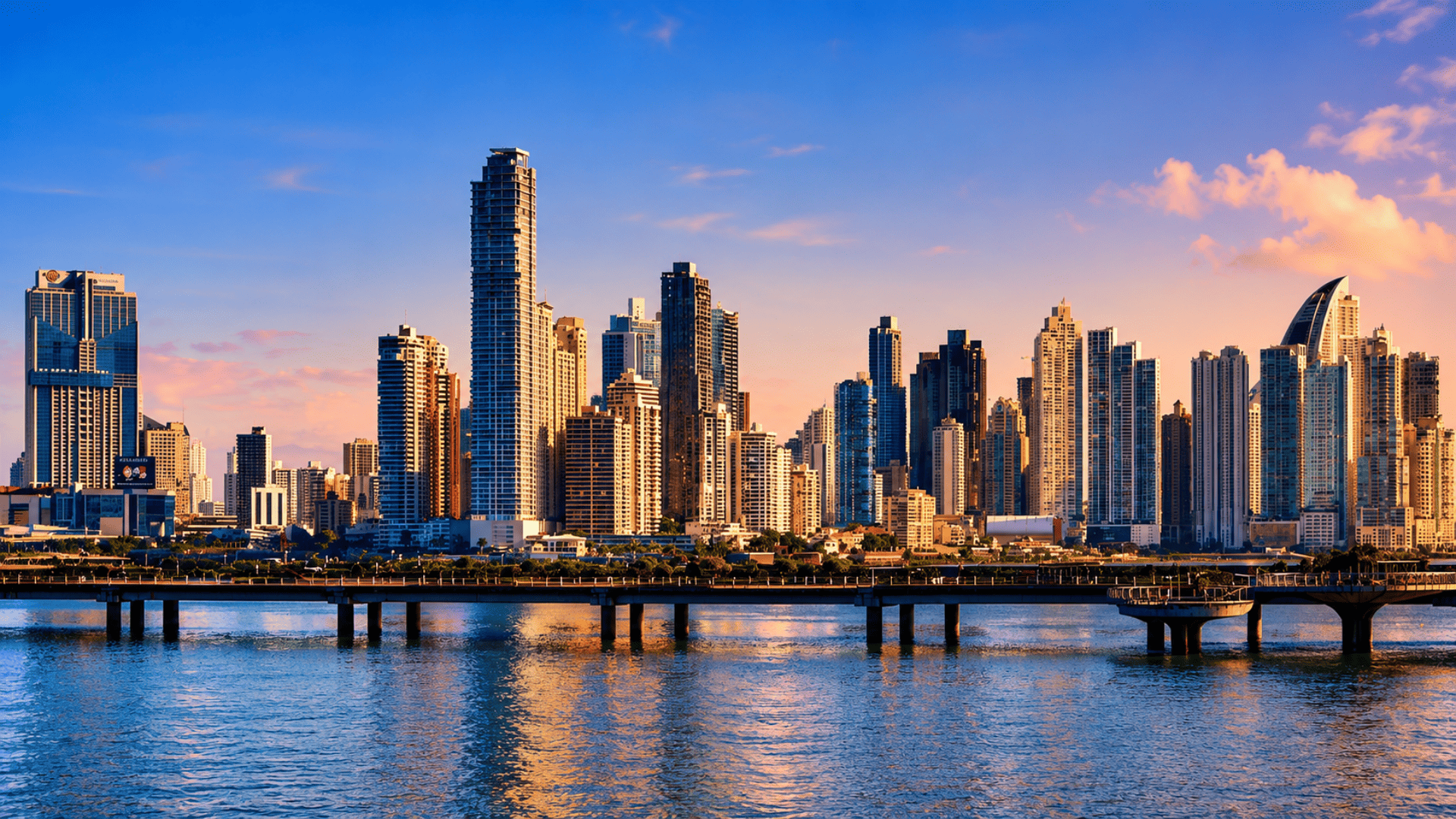
How do international visitor flows affect real estate?
This is precisely where the aviation story becomes relevant to real estate investors.
A city experiencing growth in international visitors often creates demand for many different types of assets.
Not only housing.
It can also include:
- Hotels;
- Serviced apartments;
- Rental apartments;
- Offices;
- Commercial premises;
- Restaurants;
- Services serving international visitors.
Particularly in Panama City, where financial, commercial, tourism and international services activities are concentrated, the increase in international visitor flows may create additional demand for assets capable of serving both tourists and business travelers.
This is also why investors should look at Panama’s real estate market within a broader picture rather than only considering the initial purchase price.
From air connectivity to asset value
This chain of impact can be visualized simply:
International flight routes expand
↓
Access to Panama becomes more convenient
↓
International visitor numbers increase
↓
Demand for tourism, accommodation and services increases
↓
Economic activity and real estate are supported
This is not a formula that guarantees real estate prices will increase, but it creates a foundation of real demand that investors can incorporate into their market assessment process.
In particular, as visitors from high-spending markets such as Europe continue to increase, the potential development of hotel products, serviced apartments and high-end real estate in Panama City also becomes more noteworthy.
Panama is moving closer to the European market
An important point is that the increase in air connectivity is not happening independently.
According to currently available network data from Tocumen, Panama City now has direct flights to several major European aviation hubs, including Madrid, Paris and Amsterdam, in addition to Istanbul.
The Panama City – Madrid route is currently operated directly by Iberia and Air Europa, with a flight time of approximately 10 hours.
Meanwhile, KLM currently operates the Amsterdam – Panama City route with a frequency reported to be daily.
This creates a notable connectivity network:
Panama ↔ Madrid ↔ Europe
Panama ↔ Paris ↔ Europe
Panama ↔ Amsterdam ↔ Europe
For international investors, this connectivity has value beyond tourism.
It makes Panama more convenient for people who need to travel regularly between the Americas and Europe.
When connectivity becomes part of an asset strategy
In international investment, location is not measured only by geographical distance.
An asset located in a place with strong connectivity to international markets may possess another advantage: accessibility.
For Panama, this advantage comes from a combination of:
- Location between North and South America;
- Panama Canal;
- Port and logistics system;
- Tocumen International Airport;
- Air network connecting with Europe;
- US dollar;
- International financial system;
- Growing tourism market.
When the number of international visitors increased by 17.2% in the first five months of 2026, European visitors increased by 23.3% in Q1, and Panama Stopover increased by 38% in the first half of the year, the connectivity story is increasingly becoming an important part of Panama’s growth story.
Benefits of participating in the Panama Permanent Residency Program
Alongside the development of tourism and aviation, Panama is also attracting international investors through residency and permanent residency programs.
One of the popular options is the permanent residency program through real estate investment, which offers a number of notable benefits:
Benefits for the whole family
Investors can include their three-generation family (spouse, children and dependent parents) in the program and obtain Panama permanent residency, enjoying many similar rights to citizens within the scope permitted by law.
Business environment using USD
Panama uses the US dollar (USD) in circulation, which helps:
- Reduce currency exchange risk
- Increase financial stability
- Facilitate international transactions and investment
Freedom to invest and own assets
Permanent residents are permitted to:
- Own real estate
- Establish and operate businesses
- Participate in lawful investment activities in Panama
Opportunities to expand into international markets
With its strategic location and role as a regional logistics – financial center, Panama is considered a gateway allowing investors to access:
- The Latin American market
- North America
- And global trade routes
Forms of investment for residency
Investment amount
- Minimum: USD 300,000 in qualifying real estate in Panama
Types of assets
- Apartments
- Houses
- Commercial projects
- Completed or under-construction real estate
Investors can:
- Rent out the property
- Transfer the property
- Earn returns from exploitation activities
Investment requirements
- The real estate must be legally registered with the public registry authority
- The investment funds must be lawful and supported by clear documentation
- The transaction must be carried out through the Panama banking system
Holding period
- Minimum 5 years
Perspective for international investors
Panama is positioned at the intersection of three trends:
- Expanding international connectivity
- Growing international visitor flows
- Continued growth in tourism and services demand
For investors, the important question is not only “how many new flights are there,” but rather:
What type of demand will the new visitor flows create and which assets can benefit?
In this context, the Panama permanent residency program through real estate investment is also becoming an option worth considering for investors who want to:
- Own assets in a USD market
- Expand their international presence
- And leverage Panama’s strategic position in global trade
Casa Seguro Capital continues to monitor developments in aviation, tourism, infrastructure and international capital flows in Panama to provide investors with additional perspectives when assessing the market and selecting assets aligned with their long-term strategy.