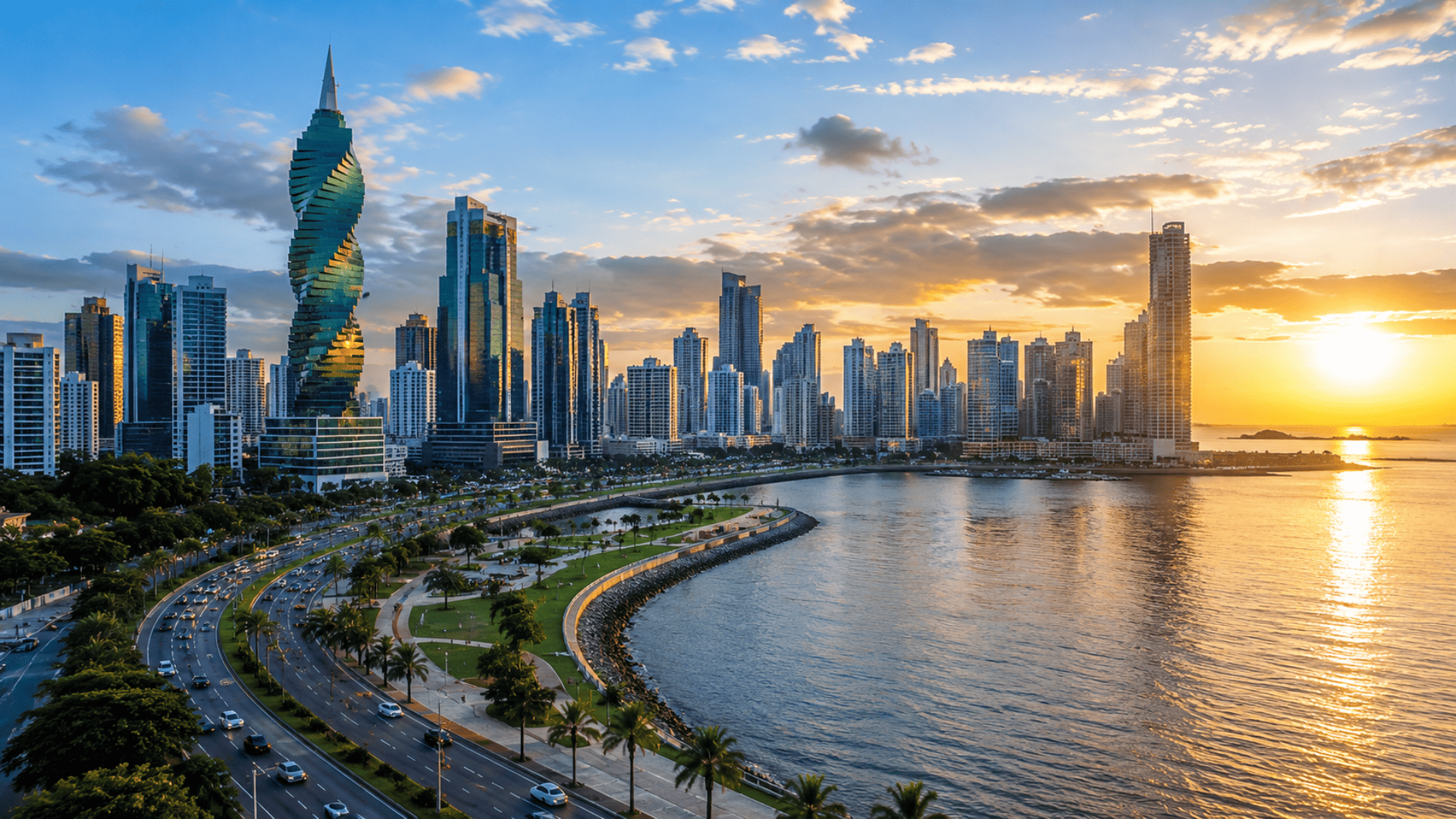
Panama has long been known for the Panama Canal, its port system, and its strategic position connecting the Atlantic and Pacific Oceans.
But behind its logistics advantage lies an increasingly important factor for international investors: a large-scale banking system, operating in USD, and continuing to attract inflows of capital from abroad.
According to PanamaTimes, Panama’s banking sector is attracting additional capital for international wealth management, particularly from North American and European investors. This trend is taking place in a context where Panama has been removed from international financial monitoring lists, and its banking system continues to strengthen its regulatory and supervisory framework.
What is notable is that these developments are being clearly reflected in official data.
Over 121 billion usd in deposits in the international banking system
According to the Superintendency of Banks of Panama (SBP), as of May 2026, total deposits in Panama’s International Banking Center (IBC) reached approximately 121.09 billion USD, an increase of 7.4% compared to the same period last year.
This represents an increase of about 8.37 billion USD in just one year.
More importantly, the growth momentum is not coming only from domestic deposits.
Foreign deposits increased by 10.74%, equivalent to an additional 4.83 billion USD, while domestic deposits rose by 5.23%.
This shows that international capital is playing an increasingly clear role in the expansion of Panama’s banking system.
International capital is growing faster than domestic deposits
This trend is not limited to May.
As of April 2026, deposits in the IBC reached 120.74 billion USD, up 7.34% year-on-year.
In detail:
- Foreign deposits increased by 13.33%
- Domestic deposits increased by 3.49%
- Domestic individual deposits increased by 5.71%
- Foreign individual deposits increased by 12.78%
Looking further back, as of February 2026, foreign deposits had reached 48.097 billion USD, up 14.72% year-on-year.
Notably, more than 58% of foreign deposits come from Colombia, Brazil, Guatemala, Costa Rica, and the Dominican Republic—highlighting Panama’s role as a regional financial platform rather than one serving only its domestic economy.
A system much larger than a small economy
One of the key distinctions of Panama is the scale of its banking system relative to its economy.
According to the IMF, Panama’s banking system has grown strongly due to policies attracting foreign investment and has long been considered an international banking center in Latin America.
By the end of 2023, banking system assets were equivalent to approximately 177% of Panama’s GDP.
This shows that finance is not a secondary sector in Panama.
Banking is a core structural component of the economy.
Geographic location, international trade activity, the Panama Canal, logistics, and cross-border capital flows all create demand for a financial system capable of serving international operations.
USD: a key advantage for international capital
Panama also has a unique feature: its economy is fully dollarized.
The USD is the official currency, and Panama does not have its own national currency or a traditional central bank.
For international investors, this can reduce one layer of currency risk when assets, cash flows, or business activities are denominated in USD.
This is also one of the factors that makes Panama attractive to those seeking a Latin American financial market with strong integration into the global economic system.
However, dollarization also has another side: Panama cannot issue its own currency to support banking system liquidity in times of crisis, unlike countries with sovereign monetary systems. This is a structural characteristic investors need to understand when evaluating the market.
The banking system is strengthening its safety buffers
The increase in international capital is not occurring in a static system.
The SBP reports that as of May 2026, the liquidity ratio of the IBC reached 60%, double the regulatory minimum of 30%.
Meanwhile, the Capital Adequacy Ratio (CAR) stood at 16.04%, significantly above the 8% minimum.
Total assets of the IBC reached 167.44 billion USD, up 6.8% year-on-year.
These figures show that Panama’s banking system is not only expanding in size but also maintaining relatively strong liquidity and capital buffers.
This is particularly important as Panama seeks to strengthen its image as a financial hub serving international capital flows.
From “offshore banking” to international wealth management
One notable shift in Panama’s financial narrative is how the banking sector is being perceived.
Panama was once frequently mentioned in discussions about offshore banking and cross-border asset structures.
But today’s financial system operates in a more transparent and tightly regulated environment.
The IMF notes that Panama was on the FATF grey list from June 2019 to October 2023, and was later removed after implementing reforms related to anti-money laundering and counter-terrorism financing frameworks.
Therefore, the current story is not simply that “Panama has international banks.”
Rather:
Panama is attempting to build an international financial ecosystem capable of attracting capital while meeting increasingly high regulatory standards.
This helps explain why wealth management inflows from North America and Europe are becoming an important topic of interest.
Why this matters for international investors
For investors, an attractive market is not only evaluated based on property prices or expected returns.
Another key question is:
What financial ecosystem is the asset embedded in?
Panama has a relatively unique ecosystem:
- A USD-based economy
- A large international banking system
- Rapidly growing foreign deposits
- A global port and logistics network
- A strategic position between two oceans
- Increasingly important international capital flows
- A continuously strengthened banking supervision framework
As of May 2026, the IBC holds approximately 121.09 billion USD in deposits and 167.44 billion USD in total assets.
These figures show that Panama is not only a growing real estate market.
It is also a market embedded in a significant cross-border financial ecosystem.
Real estate and wealth management: increasingly connected components
As international capital flows into Panama, investor needs are also evolving.
They are not only looking for a place to buy real estate.
They may simultaneously be interested in:
- Where to store and manage assets
- The ability to conduct international transactions
- Currency stability
- The business environment
- Real estate investment opportunities
- Residency rights for themselves and their families
This is why Panama is increasingly viewed in a broader sense: a market connecting finance, real estate, trade, and international wealth management.
However, investors should also note that holding residency rights in Panama does not automatically guarantee approval to open a bank account. Banks still conduct due diligence on clients, source of funds, purpose of account usage, and financial documentation according to each institution’s requirements.
Casa seguro capital’s perspective
At Casa Seguro Capital, we believe Panama should be viewed beyond the concept of “investing for residency.”
A long-term international strategy should consider simultaneously:
Residency – assets – banking – cash flow – usability – and the economic environment.
The increase in foreign deposits is one of the most notable signals.
From 46.57 billion USD in foreign deposits at the end of 2025, to 48.10 billion USD in February 2026, and continuing to rise in subsequent months, international capital is becoming an increasingly important part of Panama’s banking system.
At the same time, a 60% liquidity ratio, 16.04% CAR, and 167.44 billion USD in total IBC assets as of May 2026 are forming a notable picture of the system’s scale and health.
For international investors, the question is therefore no longer only:
“Is Panama a good place to invest?”
But also:
“What role can Panama play in my long-term wealth management and international presence strategy?”
This is the perspective Casa Seguro Capital adopts when evaluating opportunities in Panama: not focusing on a single investment product, but examining the entire ecosystem behind assets and residency rights.