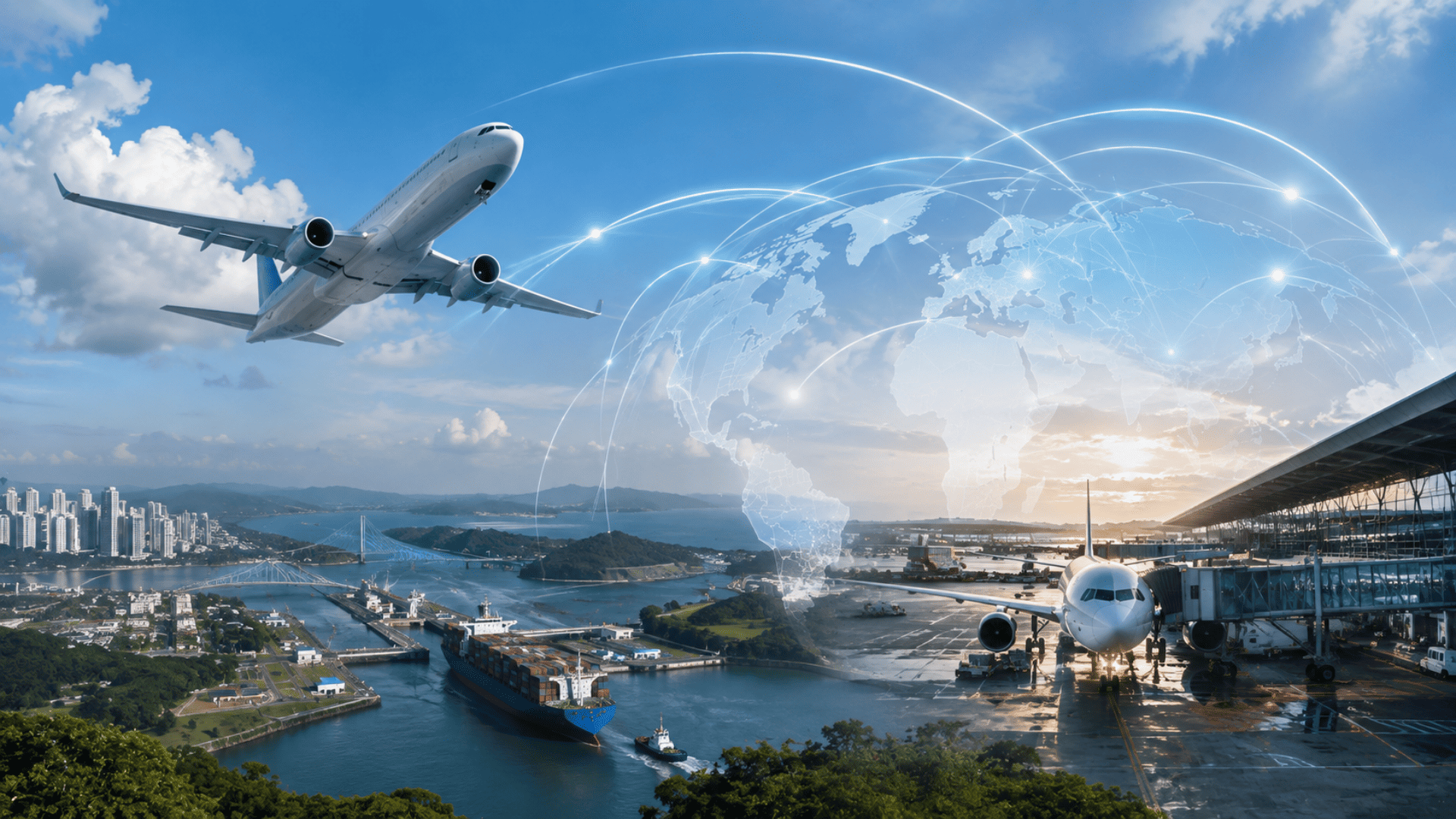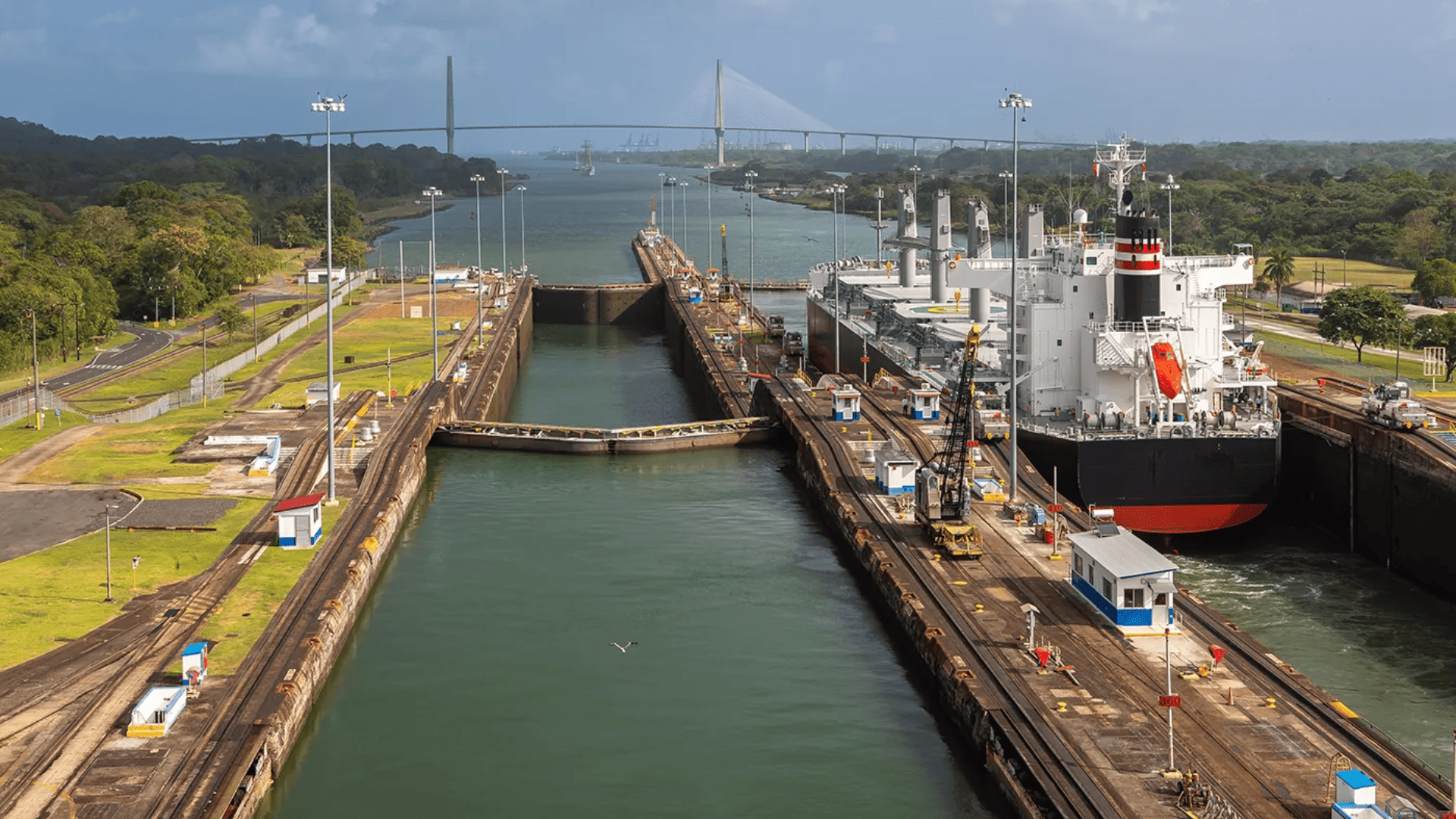
For more than a century, the Panama Canal has played the role of one of the world’s most important maritime routes, connecting the Atlantic and Pacific Oceans, while also helping shape the structure of global trade.
However, in the context of the modern economy, Panama’s role is no longer limited to being a “strategic transit point.”
According to The Economist, the Panama Canal is entering a new phase of strategic repositioning, as geopolitics shifts, global supply chains are restructured, and major economies compete more intensely in logistics and trade infrastructure.
This leads to an important shift:
Panama is no longer just a place where goods pass through – it is becoming a place where capital stays.
One of the most important “strategic nodes” in global trade
The Panama Canal is not simply an engineering project, but a critical link in the international trade system.
Today:
- Around 14,000–15,000 vessels pass through the canal each year
- Nearly 5% of global maritime trade flows through this route
- About 40% of U.S. container traffic is directly or indirectly connected to the canal
- This shipping route shortens thousands of kilometers of travel between Asia and the U.S. East Coast
In a context of rising logistics costs and frequent disruptions in global supply chains, routes that are stable, shorter, and easier to control such as Panama are becoming increasingly important.
But what is even more notable is:
Panama’s value is no longer in “passing through”, but in “staying”.
From transit point to an integrated economic ecosystem
The biggest transformation of Panama over the past two decades is not the canal itself, but the way the country has built an integrated economic ecosystem around its geographic advantage.
Today, Panama is not just a transport route, but an integrated economic structure that includes:
- An international logistics and cargo transshipment hub
- The Colón Free Trade Zone – the largest in the Americas
- A dual-ocean container port system (Pacific & Atlantic)
- An international financial center with a developed banking system
- A U.S. dollar-based monetary system
This combination creates something important:
👉 Panama is no longer a “point on the logistics map”, but an economic operating platform.
Within this system, goods, services, finance, and international capital all operate in a unified structure.
Why is Panama becoming increasingly important in the global economy?
Panama’s rise is not a random phenomenon, but the result of three major structural trends in the global economy.
1. Global supply chain restructuring
Multinational corporations are shifting from centralized production models to multi-hub models:
- China + Vietnam + Mexico + US reshoring (bringing production back to the U.S.)
- Nearshoring (shifting production closer to end markets, e.g. the U.S. moving to Mexico or Latin America)
- Friendshoring (shifting supply chains to politically and economically stable “ally” countries)
This increases demand for transportation between Asia and the Americas – a region where Panama naturally plays a central role.
2. Expansion of Asia–Americas trade
Trade between Asia and Latin America is growing faster than the global average.
This drives:
- demand for trans-Pacific logistics
- demand for cargo transshipment through Panama
- development of regional distribution hubs
As a result, Panama becomes a “balancing point” for two-way trade flows.
3. Geopolitics and supply chain security needs
In a context of geopolitical uncertainty and supply chain disruption risks, businesses prioritize:
- stable transport routes
- clear legal environments
- high risk control capabilities
Panama simultaneously meets these conditions, making its role not only logistical, but also one of economic security strategy.
Macroeconomic foundations strengthening investment appeal
Beyond its geographic position, Panama maintains a stable and investor-friendly macroeconomic foundation.
According to the International Monetary Fund (IMF), Panama is projected to remain among the fastest-growing economies in Latin America, with GDP growth of around 4% in 2026, outperforming many countries in the region.
Foreign direct investment also remains stable, particularly in logistics, finance, and real estate.
Notably, the Qualified Investor Program continues to show positive growth.
According to the Ministry of Commerce and Industry of Panama (MICI), during the period from July 2025 to June 2026, the program recorded:
- 268 Qualified Investor certificates issued
- USD 113.6 million in foreign investment
Compared to the previous period:
- an increase of 75 approved applications
- an increase of more than USD 23.4 million in investment
These figures reflect a clear trend:
Panama is becoming a destination for long-term capital, not just short-term capital flows.
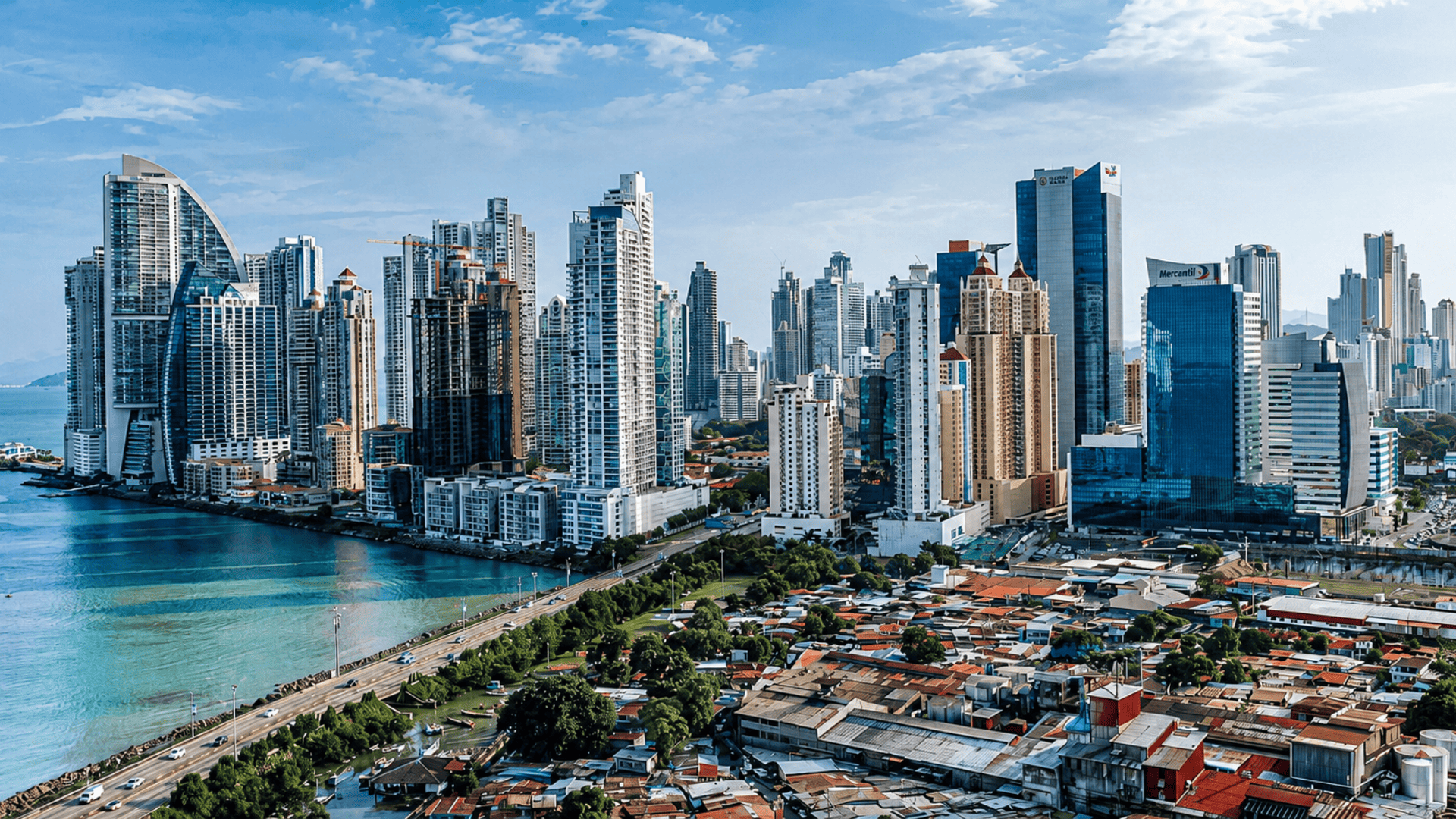
Panama real estate: reflecting the demand of a real economy
Unlike many emerging markets driven by speculation, Panama’s real estate market is supported by a functioning real economy.
As sectors such as:
- international logistics
- finance
- corporate services
- tourism and hospitality
continue to expand, real estate demand grows in a natural and sustainable way.
Key segments:
- High-end apartments in Panama City
- Long-term rental properties (rental yield)
- Hotels and serviced apartments
- Commercial offices serving international businesses
According to regional market reports, rental yields in Panama City typically range from 5% to 8% per year, depending on location and segment.
The key point is:
demand comes from international workers, logistics companies, and financial institutions – not short-term speculation.
Why international investors see Panama as a strategy, not a migration option
Global investment behavior is clearly changing.
Today, investors are no longer only seeking:
- residency rights
- tax benefits
- or short-term opportunities
but are focusing on:
- USD-denominated assets
- stable legal environments
- long-term wealth preservation
- real economic ecosystems
- global diversification strategies
Panama meets all of these conditions thanks to:
- use of the U.S. dollar
- territorial tax system
- global logistics position
- open and stable economy
Therefore, Panama is no longer a “migration destination”, but is becoming an international asset allocation platform.
Casa Seguro Capital: investing along global economic flows
At Casa Seguro Capital, we believe sustainable international investment does not come from short-term volatility, but from understanding long-term structural trends in the global economy.
Panama is a clear example:
a small country with a strategic location, an integrated economic ecosystem, and a growing ability to attract international capital.
In this context, real estate opportunities linked to the real economy are becoming particularly attractive.
The Pullman Hotel & Residences Panama City 5-star project, developed with Mercan Group and operated by the international brand Pullman under Accor, is one of the most representative examples.
With a minimum investment of USD 300,000 (approximately VND 7.8 billion) under the Qualified Investor Program, investors can:
- own a high-end hotel asset
- access cash flow from tourism and international services
- and participate in a steadily growing economy
Conclusion
As global trade continues to restructure and the role of strategic logistics routes becomes increasingly important, Panama is transforming from a “transit point” into a complete investment ecosystem.
Not only a place where goods pass through, Panama is becoming a place where capital stops, operates, and grows.
And in this picture, Panama is no longer just the “gateway between two oceans” –
it is gradually becoming the gateway of international investment in a new era.