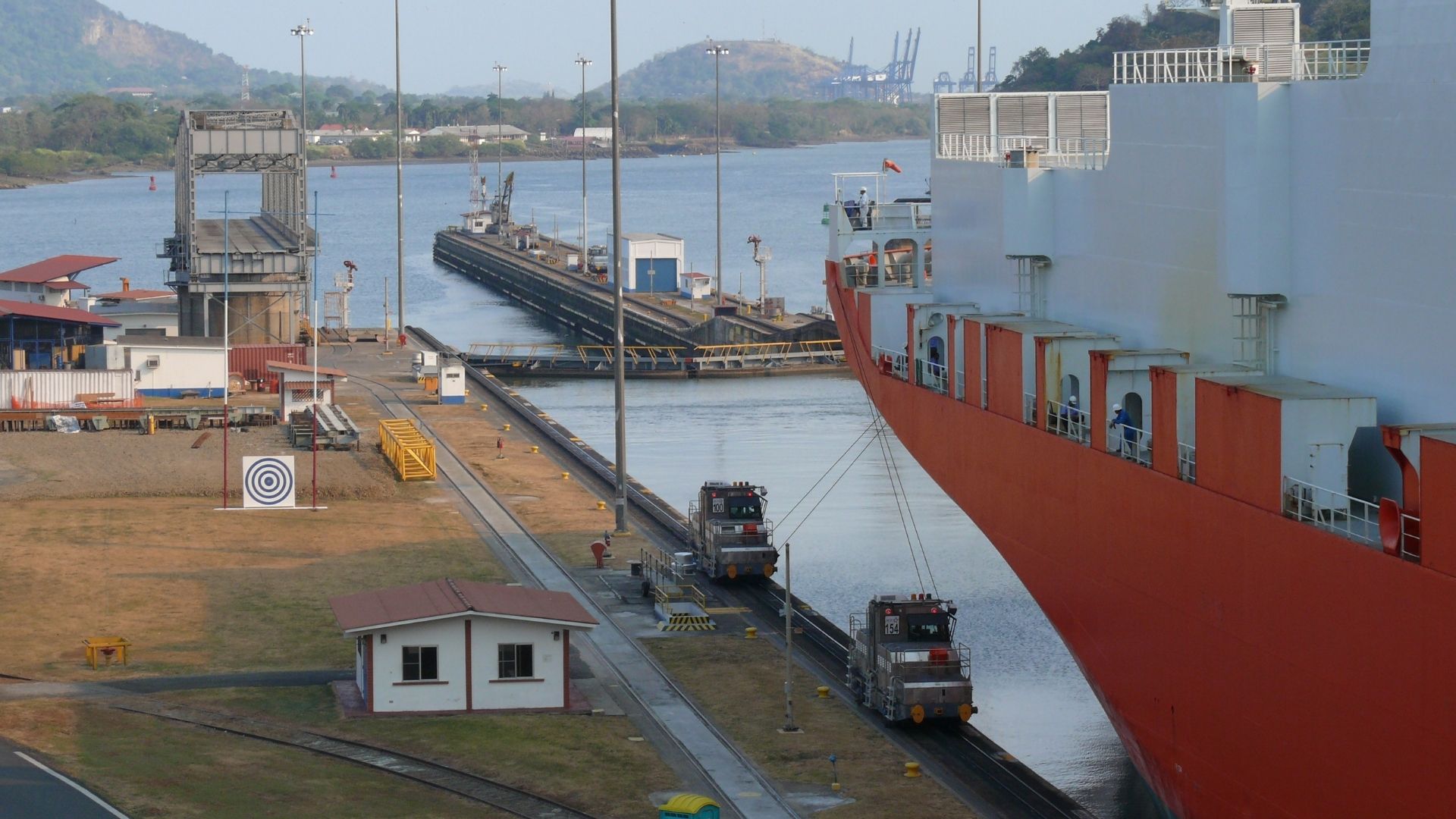
According to Reuters, the Panama Canal is currently operating at near full capacity, handling approximately 36–38 vessels per day. This surge is largely driven by a sharp increase in LNG traffic, as geopolitical tensions in the Middle East disrupt traditional shipping routes.
As strategic chokepoints such as the Strait of Hormuz become increasingly risky, alternative routes are no longer optional, they are essential infrastructure. In this context, the Panama Canal has rapidly re-emerged as one of the most important corridors connecting energy flows from the United States to Asia.
A “crossroads” of global flows
The Panama Canal handles more than 5% of global maritime trade annually, a figure that may seem modest but carries significant strategic weight.
What makes Panama unique is not its scale, but its position:
- Directly connecting the Atlantic and Pacific Oceans
- Significantly reducing transit time and logistics costs
- Enabling the restructuring of global trade routes during disruptions
Following its expansion to accommodate Neopanamax vessels, the Panama Canal is no longer just a passageway, it has become an irreplaceable node in the global logistics network.
Positioning within the global supply chain
In an increasingly volatile world, businesses are no longer seeking only the shortest route, they are prioritizing the most reliable one.
Panama is emerging as a “safe hub” due to several key factors:
- A geographically neutral position, outside major conflict zones
- Proven and continuously upgraded transport infrastructure
- Capacity to handle diverse cargo flows, from containers to energy (LNG, LPG)
More importantly, Panama does not rely on a single demand source. It simultaneously serves:
- U.S.–Asia trade flows
- Intercontinental energy transportation
- Global logistics operations
This diversification allows Panama to maintain stability even when specific regions face disruption.
From strategic infrastructure to an economic ecosystem
A notable aspect of Panama’s development is that it is not just operating a canal, it is building an ecosystem around it:
- Logistics and transshipment hubs
- Energy infrastructure (pipelines, LNG corridors)
- Financial and international service centers
Once transport infrastructure reaches a certain level of maturity, it begins to attract more than just cargo, it draws in:
- Businesses
- Capital flows
- International workforce
This marks a transition from an “infrastructure economy” to a “service-driven economy.”
Spillover effects on real estate and investment
Historically, global transit hubs have consistently driven demand for accommodation and services:
- Business travelers and international experts require long-term stays
- Increased trade activities drive conferences and corporate travel
- Rising demand for hotels and serviced apartments
In Panama, this trend is particularly evident:
- Demand is non-seasonal
- It is driven by both tourism and business needs
- A growing proportion of high-spending visitors
This creates a strong foundation for income-generating assets.
Panama in a new global growth cycle
The Panama Canal operating at full capacity is not just a reflection of increased shipping demand, it signals a broader structural shift:
- Global supply chains are being reconfigured
- “Safe” trade routes are gaining strategic value
- Stable transit hubs are becoming capital convergence points
In this context, Panama is no longer just a transit point, it is evolving into a global center.
Conclusion
The Panama Canal once again demonstrates its critical role in the global trade system. However, the more important story lies beyond capacity metrics:
Panama is transforming from a transit corridor into a multidimensional economic hub.
As flows of goods, capital, and people converge, assets tied to international cash flows, particularly in hospitality and serviced real estate, are positioned to benefit significantly in the long term.