For many years, Panama was primarily known for the Panama Canal, one of the world’s most strategic maritime trade routes connecting the Atlantic and Pacific Oceans.
However, in recent years, the country has increasingly taken on a different role: A rising destination for globally mobile professionals, international entrepreneurs, and individuals seeking to diversify their residency and assets beyond traditional financial centers.
According to Newsroom Panama, 2026 is seeing a significant increase in the number of remote workers relocating to the country, as more professionals seek locations that offer quality of life, financial stability, and strong international connectivity.
More importantly: Panama is no longer attracting only tourists or international retirees, it is increasingly attracting global talent and international capital.
A fundamental shift in how people choose where to live
In the past, professionals in finance, technology, and international business were often tied to cities such as:
- New York
- London
- Singapore
- Hong Kong
because these cities concentrated jobs, financial systems, and business networks.
But after the global shift toward remote work, this model has started to change.
More people now realize: They no longer need to live in expensive global cities in order to maintain international careers.
Instead, they are searching for:
- Better quality of life
- Lower living costs
- Greater personal security
- More favorable tax environments
- And stronger global mobility options
Panama is increasingly positioned at the intersection of all these priorities.
What makes Panama different within Latin America?
For many people, Latin America is still associated with:
- Limited infrastructure
- Less developed financial systems
- Complex business environments
Yet Panama represents a very different case.
Thanks to the strategic importance of the Panama Canal, the country has long developed strong capabilities in:
- International banking
- Logistics
- Maritime trade
- Global commerce services
- Financial infrastructure
As a result, Panama has become one of the most internationally integrated economies in the region.
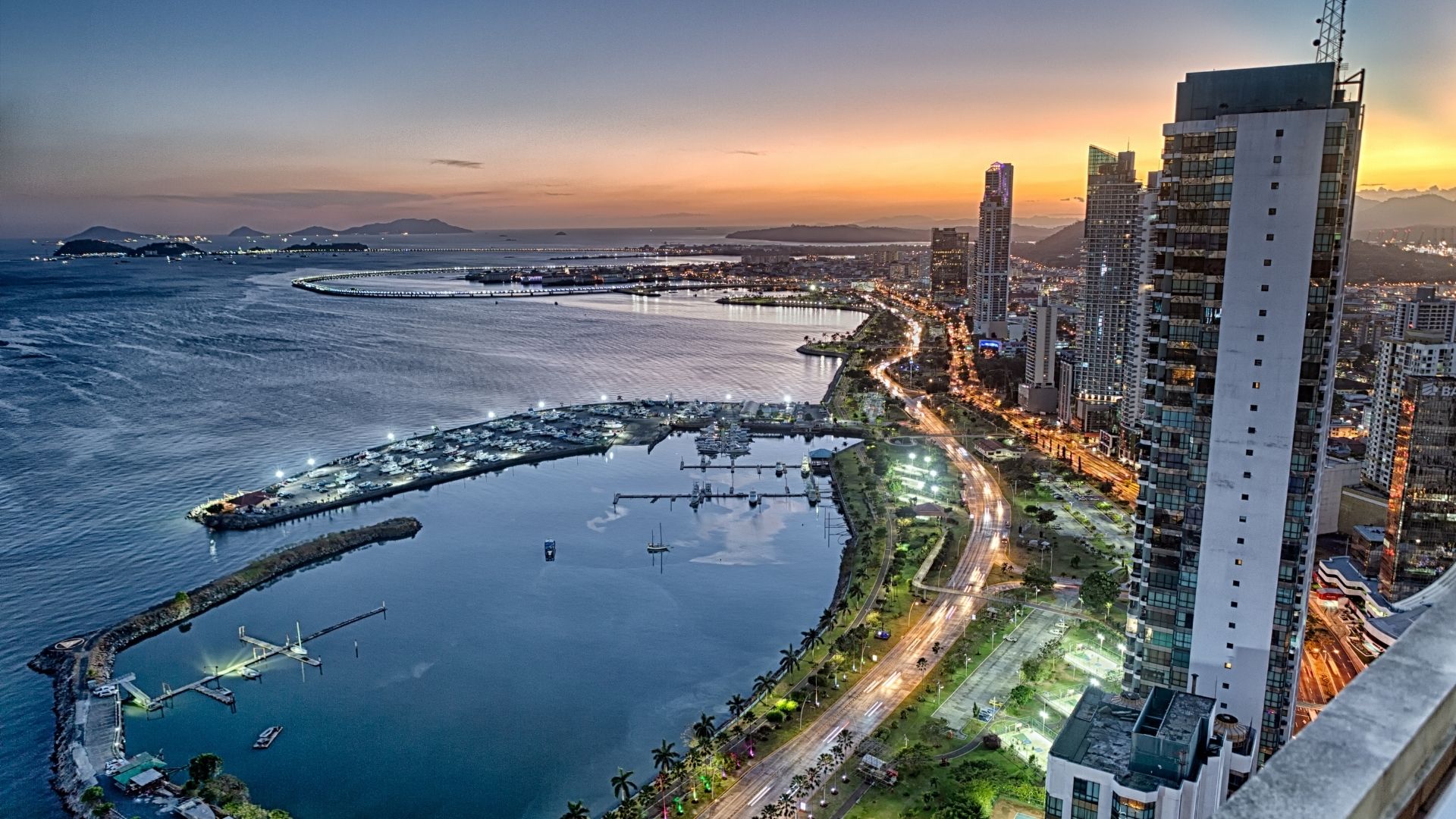
Today, Panama City offers:
- Modern financial districts
- International banking networks
- Advanced telecommunications infrastructure
- Premium residential developments
- A rapidly growing international community
In many ways, Panama City is increasingly being viewed as: An emerging international hub within Latin America.
The Panama Canal is about more than shipping
The Panama Canal has long been the backbone of the country’s economy.
Approximately 5% of global maritime trade passes through the canal, giving Panama a unique role within international supply chains.
But the broader impact goes much further:
- Logistics growth
- Financial sector expansion
- International business services
- Rising global mobility flows
In other words: The Panama Canal does not only move cargo, it also attracts capital, businesses, and international residents.
This is one reason Panama is increasingly appealing to:
- International entrepreneurs
- Global investors
- High-income remote professionals
- Individuals seeking a second residency strategy
Tax advantages remain a major attraction
One of Panama’s strongest advantages is its tax structure.
In many cases, foreign-sourced income may not be taxed in Panama, depending on residency status and income structure.
This is particularly attractive for:
- International business owners
- Investors
- Freelancers and remote professionals
- Individuals with income streams across multiple countries
When combined with lower living costs and greater asset protection opportunities, Panama increasingly becomes: A place not only to live, but also to preserve and structure international wealth over the long term.
Panama’s real estate market is benefiting directly
As international populations relocate, real estate is often one of the first sectors to benefit.
In Panama, this is becoming increasingly visible through rising demand for:
- Centrally located apartments
- Long-term rental properties
- International residential communities
- Serviced residential developments
Importantly: Today’s demand is not driven purely by speculation, but by genuine residential and operational needs.
This is a critical distinction.
Markets supported by:
- Real population growth
- Real economic activity
- Genuine housing demand
tend to demonstrate greater long-term resilience than purely speculative markets.
Panama and the rise of global residency strategies
Over the past few years, more internationally minded individuals have started prioritizing:
- Reduced dependence on a single country
- Additional residency options
- International asset diversification
- Greater global mobility
This is becoming a worldwide trend.
And Panama is increasingly emerging as one of the most attractive options because of:
- Its strategic location
- Foreign-friendly environment
- Developed financial infrastructure
- Lower costs compared to traditional global centers
As a result, Panama is no longer viewed solely as a logistics nation, but increasingly as: A new international platform for residency, wealth planning, and global mobility within Latin America.
Conclusion
The growing wave of remote professionals relocating to Panama is not simply a lifestyle trend.
It reflects a much broader shift:
- The way people choose where to live is changing
- International capital flows are evolving
- And globally connected countries such as Panama are benefiting significantly
Within this environment, Panama is steadily emerging as: A convergence point for finance, logistics, international residency, and global living.