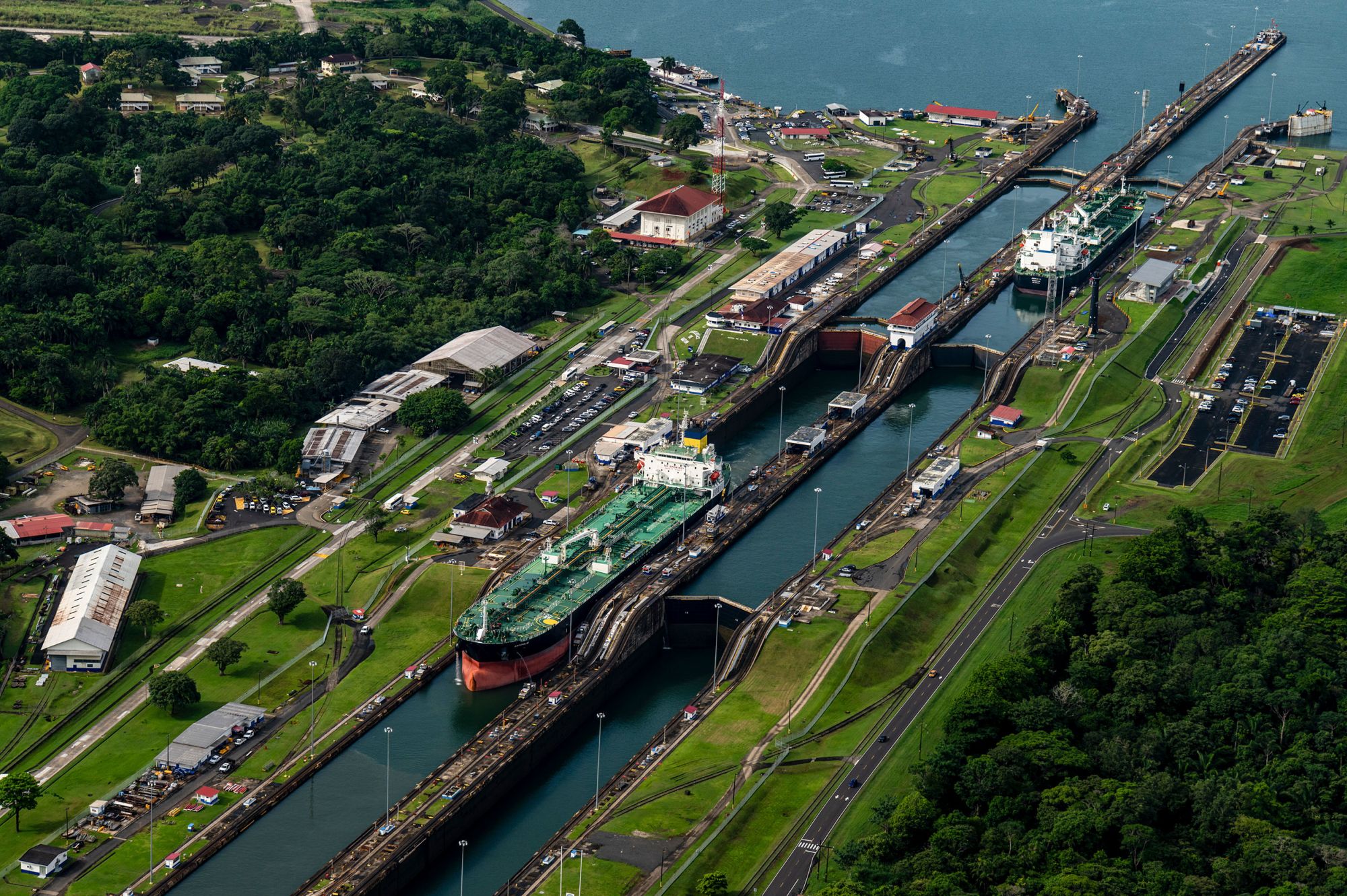
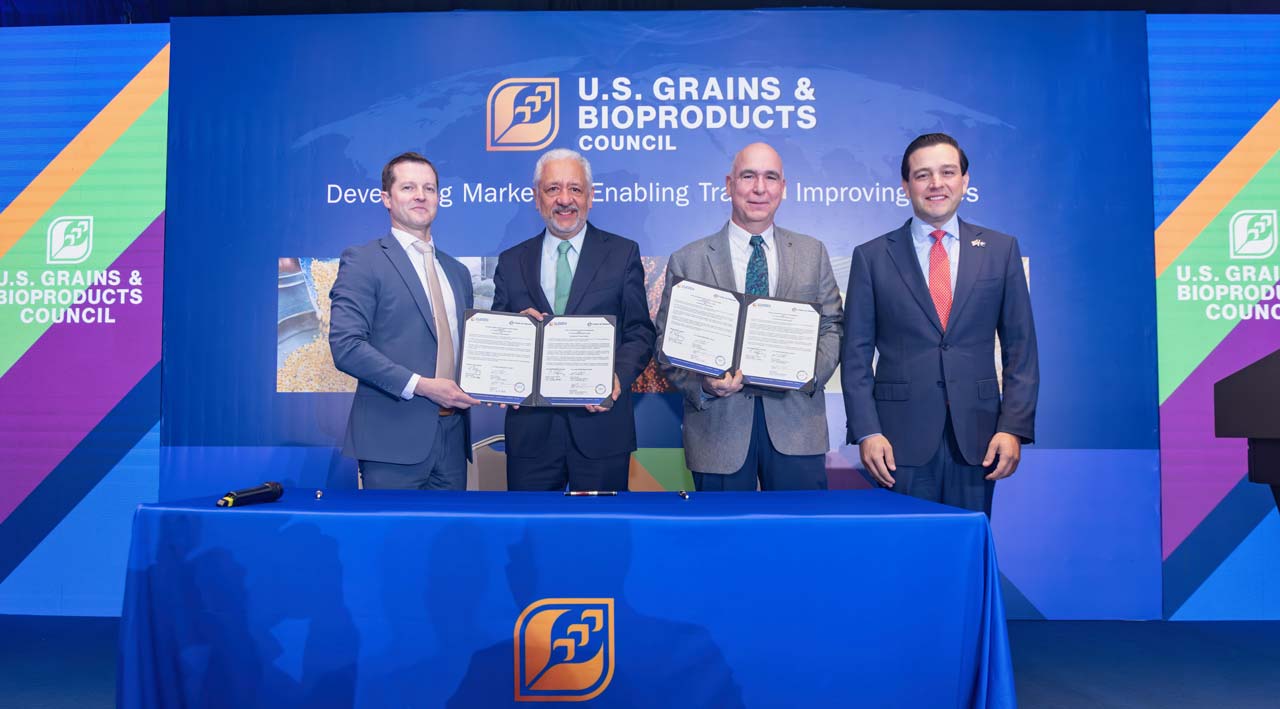
The signing of a Memorandum of Understanding (MOU) between the Panama Canal Authority (ACP) and the U.S. Grains Council (USGC) marks a strategic step in reinforcing Panama’s role in the global agricultural and biofuels supply chain. This agreement goes beyond a purely commercial arrangement, it reflects Panama’s growing geoeconomic importance amid the restructuring of global trade.
Content and significance of the MOU
According to official announcements, the MOU focuses on:
-
Enhancing technical cooperation and market information exchange
-
Optimizing the flow of U.S. grains and bio-products through the Canal
-
Improving logistics efficiency and the competitiveness of this maritime route
The United States is one of the largest grain exporters in the world, with Asian markets heavily dependent on shipping routes via the Panama Canal. This agreement demonstrates a joint effort to ensure the stability and predictability of this strategic corridor, particularly amid:
-
Disruptions in the Red Sea and Middle East
-
Geopolitical volatility affecting the Suez route
-
Post-pandemic supply chain pressures
As a result, the Panama Canal continues to affirm its role as a critical artery of the global economy.
Panama Canal: a strategic global maritime chokepoint
Each year, the Panama Canal handles approximately 5% of global maritime trade, facilitating the movement of hundreds of millions of tons of cargo between the Atlantic and Pacific oceans. Following its 2016 expansion (Neopanamax), the Canal can accommodate larger vessels, significantly increasing:
-
Container volumes
-
Dry bulk cargo such as grains
-
Energy and petrochemical shipments
The United States is among the biggest beneficiaries of this route. Grain and biofuel exports to Asia rely heavily on the Canal, making the MOU with the U.S. Grains Council strategically important for:
-
Optimizing traffic flow and logistics efficiency
-
Strengthening supply chain predictability and stability
-
Enhancing technical and market data collaboration
As other global routes face increasing security risks, Panama is emerging as a more geopolitically stable transit corridor.
Strategic infrastructure as a foundation for economic growth
Countries that control global trade chokepoints often enjoy advantages beyond their nominal GDP. For Panama, the Canal not only generates direct USD-denominated revenue, but also activates a broader economic ecosystem, including:
-
Ports and logistics systems
-
Colón Free Trade Zone, one of the largest in the Americas
-
Financial and banking sectors
-
Insurance and maritime services
Panama operates a USD-based economy, eliminating local currency exchange risk—an important factor for international investors. In addition, the country applies a territorial tax system, meaning that foreign-sourced income is not taxed domestically.
The combination of:
-
Globally strategic infrastructure
-
Stable foreign currency inflows
-
A developed financial system
-
Competitive tax policies
creates a strong foundation for attracting long-term international capital, rather than short-term speculative flows.
Panama in a fragmented geopolitical landscape
Rising tensions in the Middle East and other hotspots are increasing marine insurance costs and the risk of trade disruptions. In this environment, countries with relative neutrality and limited direct exposure to conflicts are becoming more attractive to global investors.
Panama, with its strategic Central American location and USD-linked economy, is increasingly viewed as a “safe anchor” in global asset allocation structures. This explains why the country attracts not only logistics companies but also individual investors restructuring assets into multi-center portfolios.
From strategic infrastructure to investment residency
The development of the Panama Qualified Investor Program can be seen as part of a broader economic evolution. When a country controls infrastructure of global importance, such as the Panama Canal, which handles around 5% of global maritime trade, the benefits extend beyond operational revenue.
It creates an expanded ecosystem of ports, free trade zones, insurance, finance, and maritime services. As stable flows of goods and capital pass through, the economy builds financial depth and capital absorption capacity.
In this context, investment-based residency programs are not the starting point, but rather the result of an established economic foundation built around:
-
Strategic infrastructure
-
A dollarized financial system
-
A global trade transit role
The program allows foreign investors to obtain residency through:
-
Qualified real estate investment
-
Financial investment
-
Fixed-term bank deposits in Panama
With a typical investment threshold starting from USD 300,000, it remains competitive compared to many European programs.
For international investors, the core value lies not only in residency, but in:
-
Establishing a legal presence in a USD economy
-
Diversifying geographic risk
-
Adding a Americas-based pillar to global asset allocation strategies
Luxury real estate and asset allocation strategy
The growth of the Panama Canal and its logistics ecosystem is driving increased demand for premium real estate in key financial and commercial districts.
Mercan Group focuses on high-end real estate projects tied to international operations and strategic urban locations in Panama City, including:
Pullman Hotel & Casino: international hospitality asset
The Pullman Hotel & Casino is a premium hotel and entertainment complex located in central Panama City, operating under the Pullman brand of Accor—one of the world’s largest hotel groups.
The project includes:
-
International-standard hotel facilities
-
Casino and entertainment amenities
-
Conference and premium service spaces
Its association with Accor provides advantages such as:
-
Global management and operational systems
-
International customer network
-
Established service and governance standards
Given Panama’s role in handling ~5% of global maritime trade, demand for business and conference accommodation has strong long-term fundamentals, positioning this project as a service-economy-linked asset.

Santa Maria Residences: high-end residential asset
In contrast, Santa Maria Residences is part of the Santa María master-planned community, one of the most prestigious residential areas in Panama City.
The project features:
-
International-standard golf course
-
Green spaces and integrated infrastructure
-
Gated security
-
A community of high-net-worth residents and international professionals
Santa María is considered a high-value, sustainable residential area due to:
-
Long-term urban planning
-
Convenient access to financial districts and the airport
-
A concentration of affluent residents
From an asset allocation perspective, it represents:
-
Premium residential property in a USD-based economy
-
A suitable environment for long-term family residency
-
A blend of lifestyle and capital value preservation