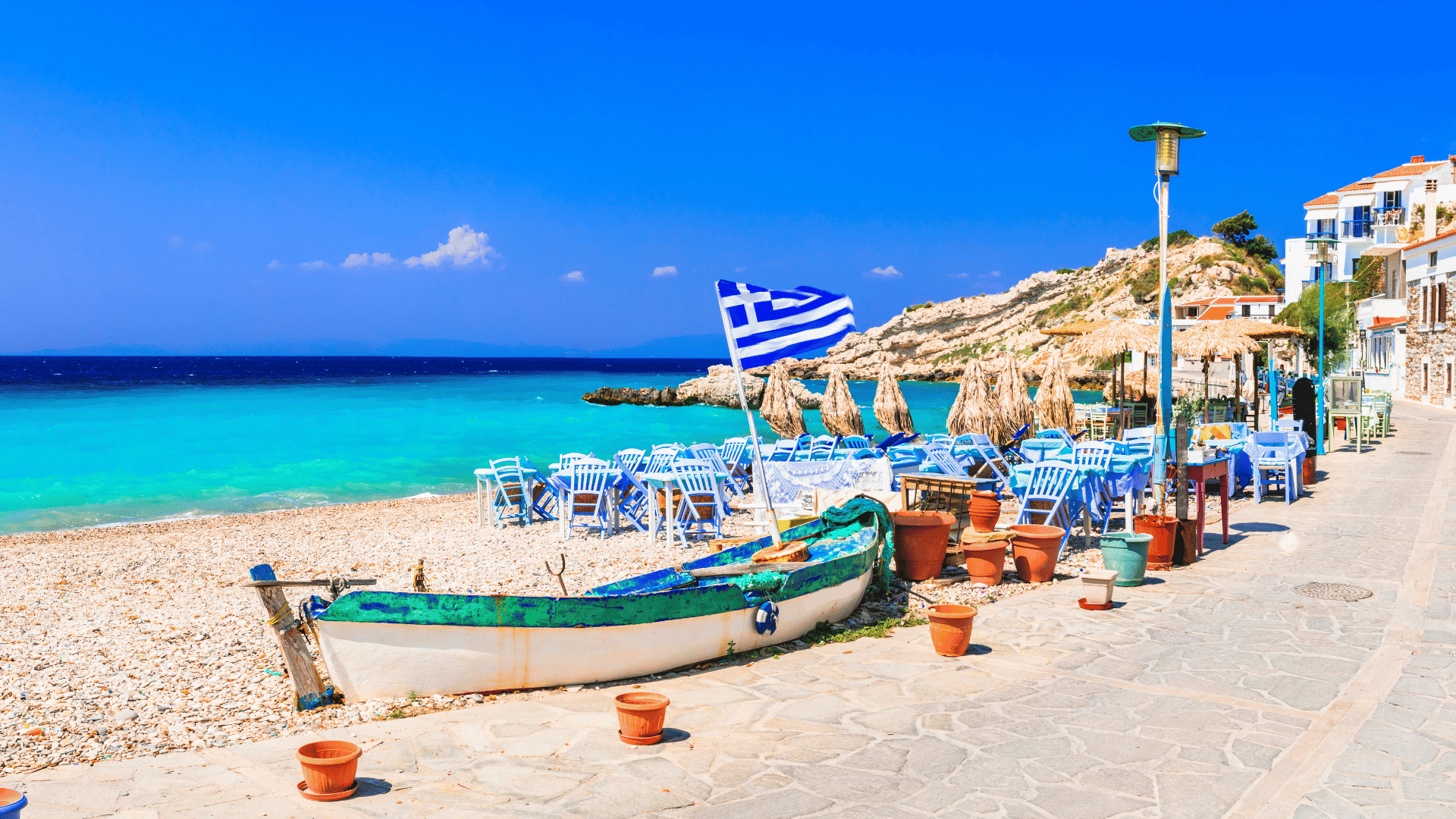
Greece has recently been ranked as one of the world’s leading destinations for the “dock and dine” tourism trend. This increasingly popular form of travel in the Mediterranean involves tourists arriving by yacht or private vessel, docking at coastal ports or islands to enjoy local cuisine and cultural experiences.
Being at the forefront of this trend not only highlights Greece’s long-standing appeal in marine tourism, but also shows how the country is leveraging its natural advantages and infrastructure to attract high-spending international visitors. For the real estate market—especially tourism-focused rental properties—the rise of premium travel trends such as “dock and dine” is creating notable opportunities for investors.
“Dock & Dine”: A premium Mediterranean travel trend
The concept of “dock and dine” is becoming increasingly common across European coastal destinations. Travelers sail by yacht, stop at small ports or islands, enjoy local dining experiences, and continue their journey to other destinations.
Greece is considered an ideal location for this trend due to several key advantages:
-
More than 6,000 islands and islets across the Aegean and Ionian Seas
-
A well-developed network of marinas and coastal ports
-
A globally renowned Mediterranean cuisine
-
A mild climate with an extended tourist season
Visitors participating in yacht-based travel typically belong to high-net-worth and high-spending segments. Beyond onboard services, they also spend significantly on:
-
Restaurants and local dining experiences
-
Hotel stays or apartments onshore
-
Leisure and cultural activities
As a result, this trend benefits not only tourism but also the broader ecosystem of services catering to international visitors.

Tourism remains a key growth driver of Greece’s economy
For many years, tourism has played a central role in Greece’s economy. Before the pandemic, the country welcomed over 30 million international visitors annually, with tourism contributing around 20% of GDP.
Following the global tourism recovery, Greece continues to see stable growth in international arrivals. Major destinations such as Athens, Santorini, Mykonos, and Crete remain among Europe’s most popular travel hotspots.
At the same time, experience-based tourism—including yachting, gastronomy, and cultural exploration—is emerging as a new growth engine for the sector.
For cities like Athens, rising tourist inflows are not only boosting tourism revenue but also driving strong demand for short-term accommodation and rental apartments.
Rental real estate benefiting from tourism growth
The expansion of tourism, especially high-end travel, is generating strong demand for short-term rental properties in Greece.
Many international travelers now prefer flexible accommodation options over traditional hotels, such as:
-
Holiday apartments
-
Serviced residences
-
Vacation villas
These property types are particularly popular in major cities and tourist destinations.
Athens is a prime example. In recent years, the capital has become one of Europe’s fastest-growing short-term rental markets, supported by:
-
Stable international tourist arrivals
-
Competitive property prices compared to Western European cities
-
Improving tourism and transport infrastructure
This combination has made Athens an increasingly attractive destination for real estate investment focused on rental income.
Keranis Project: Investment opportunity in central Athens
As Athens continues to benefit from tourism growth, new residential developments designed for short- and long-term rentals are gaining attention.
One notable example is the Keranis Residences project, located in Athens. The development is designed to offer modern apartments suitable for both long-term living and short-term rental use.
Located in the capital—where most international visitors enter Greece—the project benefits from:
-
Strong and growing urban tourism demand
-
Stable international visitor flows
-
High demand for flexible accommodation options
For investors, rental-focused residential projects in major tourist cities often provide stable cash flow potential as well as long-term capital appreciation aligned with local real estate growth.

Tourism and real estate: Two interconnected growth engines
Greece’s position as a leading destination for the “dock and dine” trend reinforces its strong role in global marine tourism.
As premium travel segments such as yachting and culinary tourism continue to expand, international visitors tend to increase spending on accommodation and local experiences.
This creates a clear link between tourism growth and rental real estate potential.
For investors seeking opportunities in Europe, Greece—supported by its tourism strength, climate, and competitive investment costs—is increasingly emerging as a compelling destination in the tourism-driven real estate sector.