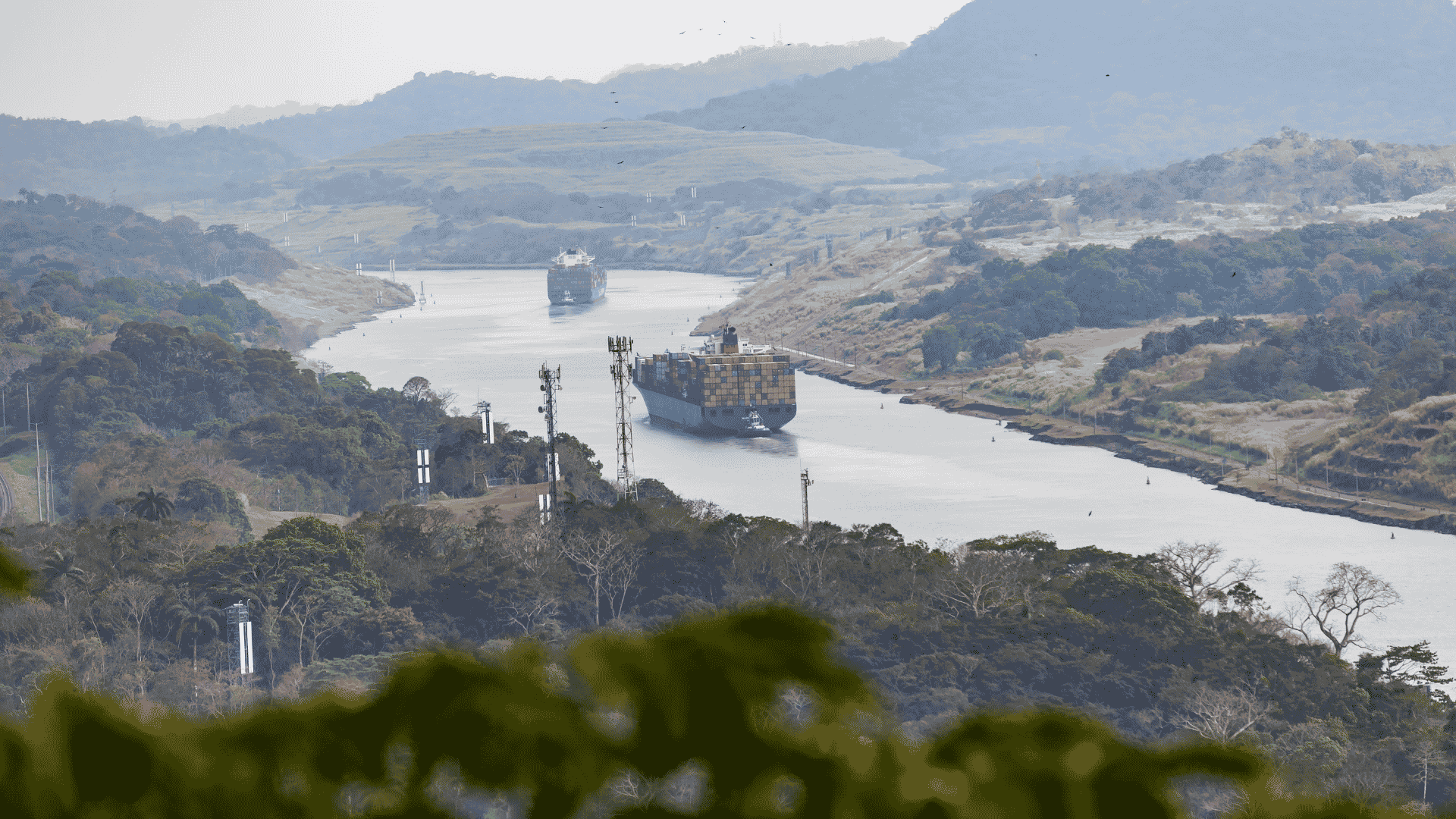
For many years, Panama has been recognized as one of the world’s most strategically positioned countries thanks to the Panama Canal — the maritime route connecting the Atlantic and Pacific Oceans.
However, what is happening in 2026 shows that Panama’s importance now goes far beyond geography alone.
As:
- Asia sharply increases imports of oil and natural gas from the United States,
- Traditional shipping routes face growing geopolitical risks,
- And global supply chains continue to restructure,
the Panama Canal is becoming one of the most critical routes for global energy trade.
According to recent reports, demand for Panama Canal transit has surged to the point where: Some vessels are paying as much as USD 4 million simply to secure priority passage through the canal.
This clearly reflects: The rapidly increasing strategic value of Panama within the new global trade structure.
Why is Asia increasing energy imports from the United States?
One of the main drivers is the situation surrounding the Strait of Hormuz — the maritime corridor responsible for approximately one-fifth of global oil and natural gas exports.
As geopolitical risks increase in the region, many Asian refineries have started:
- Reducing dependence on Middle Eastern supply,
- And increasing imports of oil and gas from the United States.
To transport American energy exports efficiently to Asia: The Panama Canal has effectively become one of the key required routes.
This has led to a sharp rise in vessel traffic through Panama in recent months.
According to data from the Panama Canal Authority:
- The canal averaged approximately 34 vessels per day in January,
- Rising to around 37 vessels per day in March,
- With some days exceeding 40 transits.
In the context of ongoing global trade disruptions, this increase is highly significant.
Panama is directly benefiting from the restructuring of global trade
What matters most is: This is not simply a story about shipping congestion.
It reflects a much larger transformation:
- Global trade routes are shifting,
- Supply chains are being restructured,
- And Panama sits directly at the center of that transition.
According to released data:
- Average auction prices for priority canal transit previously stood at around USD 130,000,
- But rose to approximately USD 385,000 during March and April 2026,
- While some LNG and oil tankers exceeded bids of USD 3–4 million.
This demonstrates that: Demand for Panama Canal transit is now significantly exceeding normal capacity levels.
For Panama, this creates a major economic advantage.
The country’s revenue does not come solely from canal tolls, but also from:
- Ports,
- Logistics,
- Financial services,
- Warehousing,
- Real estate,
- And the broader commercial ecosystem surrounding the canal.

Panama is evolving into an international economic hub for Latin America
For years, Panama has already served as:
- An international financial center,
- A key trade gateway for the Americas,
- And one of the most service-oriented economies in Latin America.
However, the current restructuring of global trade is helping Panama move into an even larger role.
As:
- Cargo volumes increase,
- Logistics operations expand,
- And multinational companies seek closer access to supply chains,
Panama is benefiting simultaneously across multiple sectors:
- Transportation,
- Logistics,
- Office space,
- Housing for international professionals,
- Financial services,
- And urban real estate.
This is why Panama is no longer attracting only logistics companies, but also:
- International investors,
- Entrepreneurs,
- Globally mobile professionals,
- And individuals seeking international asset diversification.
Panama’s real estate market is being supported by real economic demand
One important point is: Real estate demand in Panama is increasingly tied to genuine economic activity.
Unlike markets heavily driven by speculation, Panama is supported by:
- International professionals,
- Expanding trade activity,
- Growing logistics operations,
- And long-term residential demand.
This is particularly important for international investors.
Over the long term: Markets supported by real economic fundamentals tend to demonstrate stronger resilience and stability.
Panama and the rise of global residency trends
Alongside its growing logistics and trade role, Panama is also emerging as a new international residency hub within Latin America.
The country is attracting attention because of:
- Its developed financial system,
- Use of the US dollar,
- Competitive tax environment,
- And strong international connectivity.
In an increasingly uncertain geopolitical and economic environment, many globally minded individuals are becoming more focused on:
- Second residency strategies,
- International asset diversification,
- And expanding access to multiple markets.
Panama is becoming part of that global trend.
Conclusion
Asia’s growing imports of American energy and the rising traffic through the Panama Canal are not merely shipping stories.
They reflect a broader reality: Panama is becoming increasingly central to the emerging structure of global trade and logistics.
As global supply chains continue to shift:
- Logistics,
- Finance,
- Real estate,
- And international residency
are all increasingly converging in Panama.
For many international investors, Panama is no longer simply a transit point.
It is steadily becoming: A strategic platform for international assets, business, and long-term global mobility.