In an increasingly volatile global financial environment, investors are no longer focused solely on returns. Instead, they are prioritizing financial structuring, risk mitigation, and long-term asset preservation.
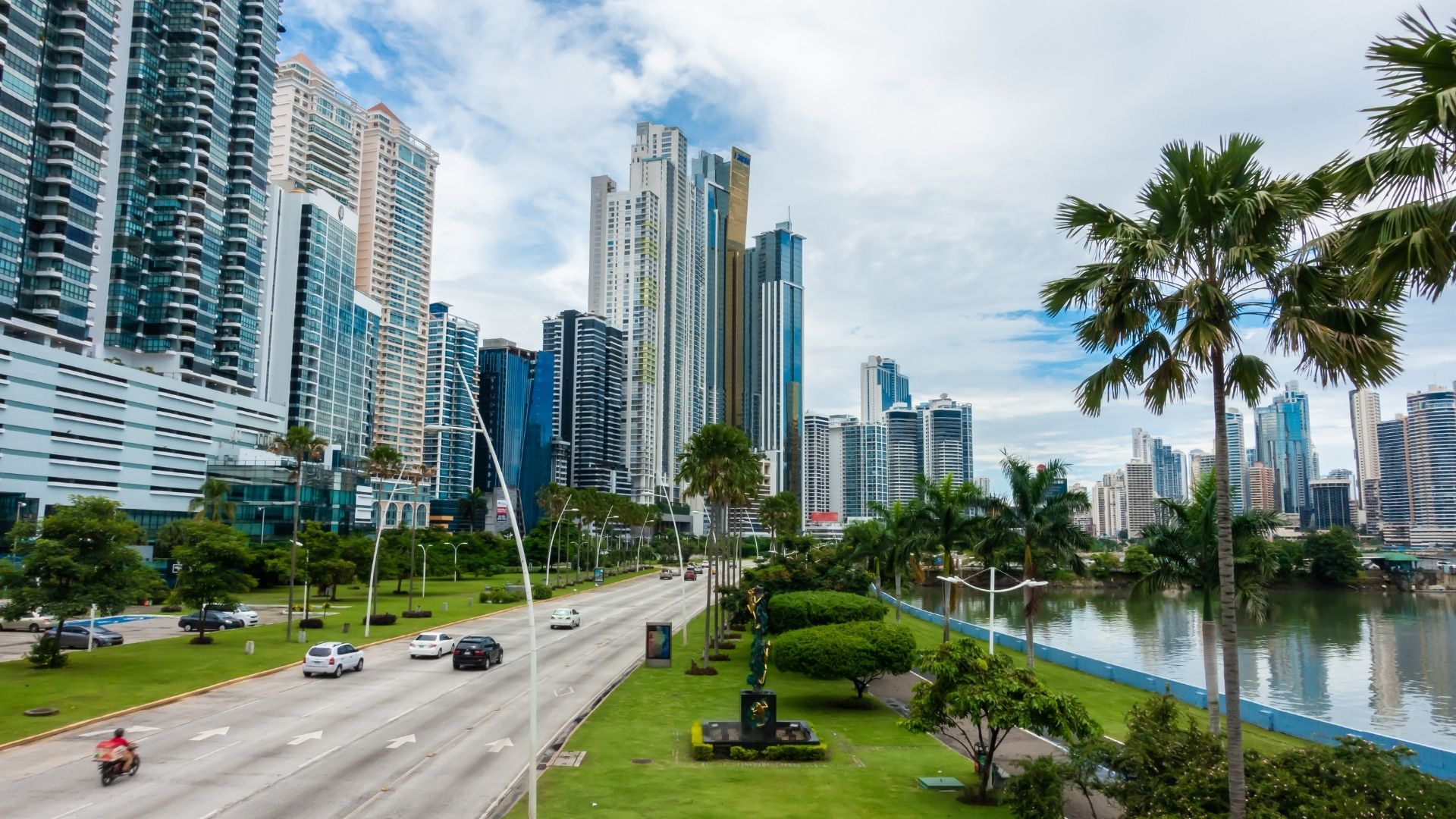
Panama has emerged as a strategic destination, driven by its combination of tax efficiency, economic stability, and its role as a financial and logistics hub in Latin America.
Panama: A global financial and trade gateway
Strategically located between two oceans and connecting North and South America, Panama serves as a key gateway for global trade and capital flows. At the heart of this ecosystem is the Panama Canal, which handles approximately 5% of global trade annually.
Panama’s growth is supported by:
- A well-developed international banking system
- A stable financial environment
- The use of the US dollar, eliminating foreign exchange risk
These factors position Panama as a central hub for cross-border business and capital movement.
Territorial Tax System: A foundation for global financial optimization
Unlike countries that apply worldwide taxation, Panama operates under a territorial tax system, meaning only income generated within Panama is subject to tax.
Core tax structure:
- Corporate Income Tax (CIT): ~25%
→ Applied only to Panama-sourced income - Foreign-sourced income: 0% (tax-exempt)
→ Includes profits generated outside Panama - Value-Added Tax (ITBMS): ~7%
→ Relatively low compared to many jurisdictions - Special regimes:
- Multinational company regime (SEM): ~5% tax
- Free Zones: long-term tax exemptions or reductions
In-depth analysis of tax advantages:
1. Foreign income exemption: Optimizing global cash flow
The cornerstone of Panama’s tax system is the full exemption of foreign-sourced income.
This is particularly beneficial for:
- International trading companies
- Holding structures managing global assets
- Investors with cross-border income streams
Rather than reducing tax rates, Panama effectively eliminates tax obligations on international income, maximizing net returns.
2. 25% corporate tax with “selective taxation”
While the headline corporate tax rate is 25%, it is important to note:
- It applies only to domestic income
- It does not impact most international revenue streams
Panama is not a traditional low-tax jurisdiction, but rather:
A selective taxation system that targets only locally generated income
3. Low VAT: Reducing operational costs
With a VAT (ITBMS) rate of approximately 7%, Panama offers:
- Lower cost of doing business
- Enhanced competitiveness for service-based industries
4. Specialized incentive regimes for international investors
Panama has implemented targeted regimes to attract foreign investment:
- SEM regime (~5% tax):
→ Designed for multinational headquarters - Free Zones:
→ Long-term tax exemptions or reductions
→ Ideal for logistics and international trade
These frameworks position Panama not only as a place to hold assets, but also as a jurisdiction to operate businesses efficiently.

A flexible and investor-friendly legal environment
Beyond tax advantages, Panama offers a highly flexible legal framework for international investors:
Ease of company formation and operation
- Fast incorporation process
- No residency requirement in many cases
- Ability to operate international businesses without local physical presence
Versatile corporate structuring
Panama supports various structures, including:
- Holding companies
- Asset management entities
- International trading companies
- Real estate investment vehicles
Strong international banking ecosystem
As a major financial center in Latin America, Panama enables:
- USD-based transactions
- Cross-border cash flow management
- Flexible financial structuring
Panama in a global asset allocation strategy
In practice, Panama is rarely used as a standalone investment destination. Instead, it is typically integrated into a multi-jurisdictional asset allocation strategy:
- Europe: market access and residency benefits
- Panama: tax optimization and USD-based income
- Other markets: diversification and risk management
Within this framework, Panama serves as a financial anchor, balancing growth and stability.
Emerging trend: From returns to strategic structuring
Investor behavior is shifting:
- From short-term profit seeking
- To long-term, structured global asset strategies
With its territorial tax system and flexible financial environment, Panama has become a key tool for:
- Tax optimization
- Asset protection
- International business expansion
Conclusion
Panama is not merely an investment destination—it is a strategic platform for global asset management.
With its combination of:
- Tax efficiency
- Legal flexibility
- International financial positioning
Panama offers investors a balanced solution between financial performance, flexibility, and long-term stability.
In an increasingly complex world, incorporating Panama into an investment portfolio is no longer optional—it is becoming a strategic necessity.