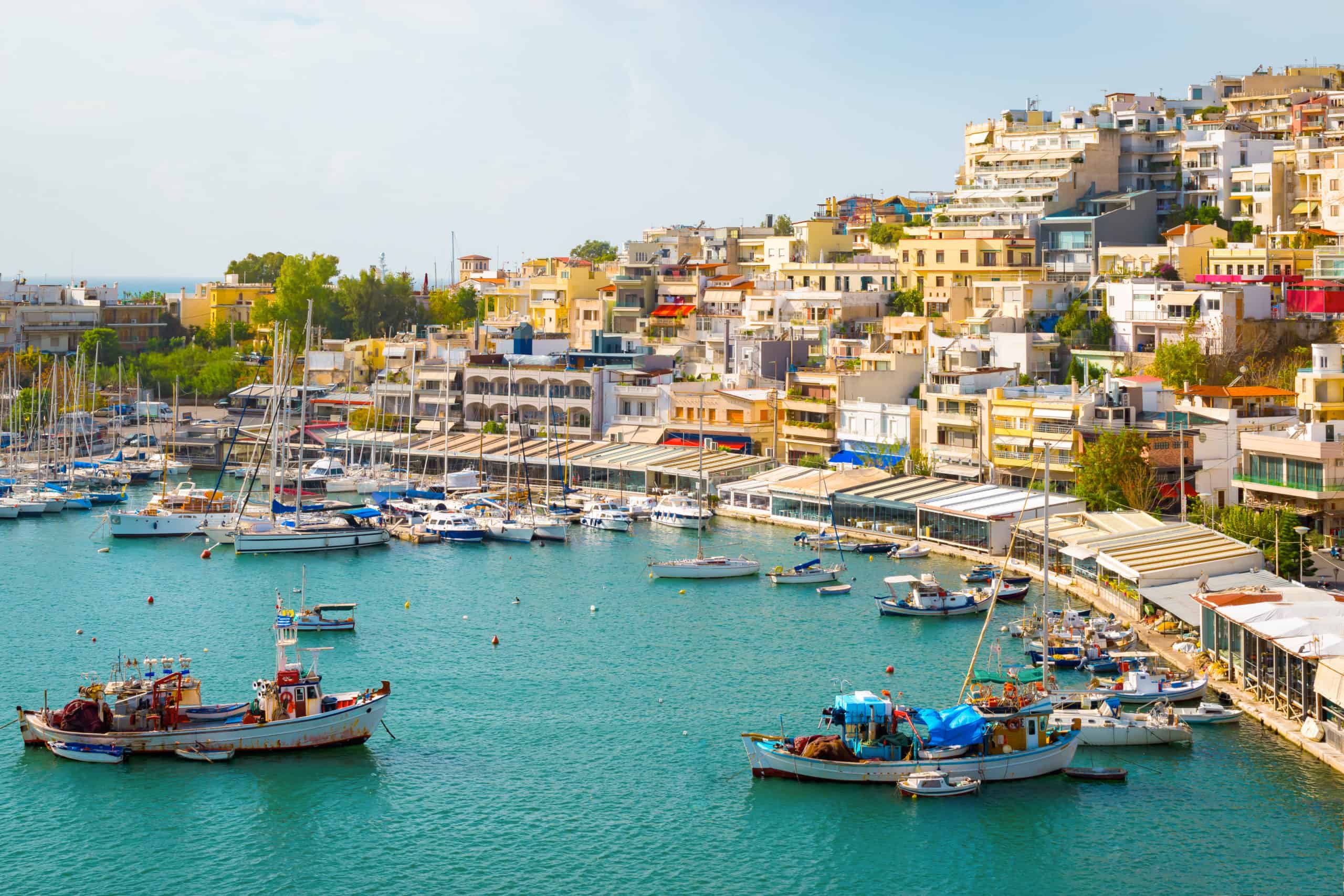
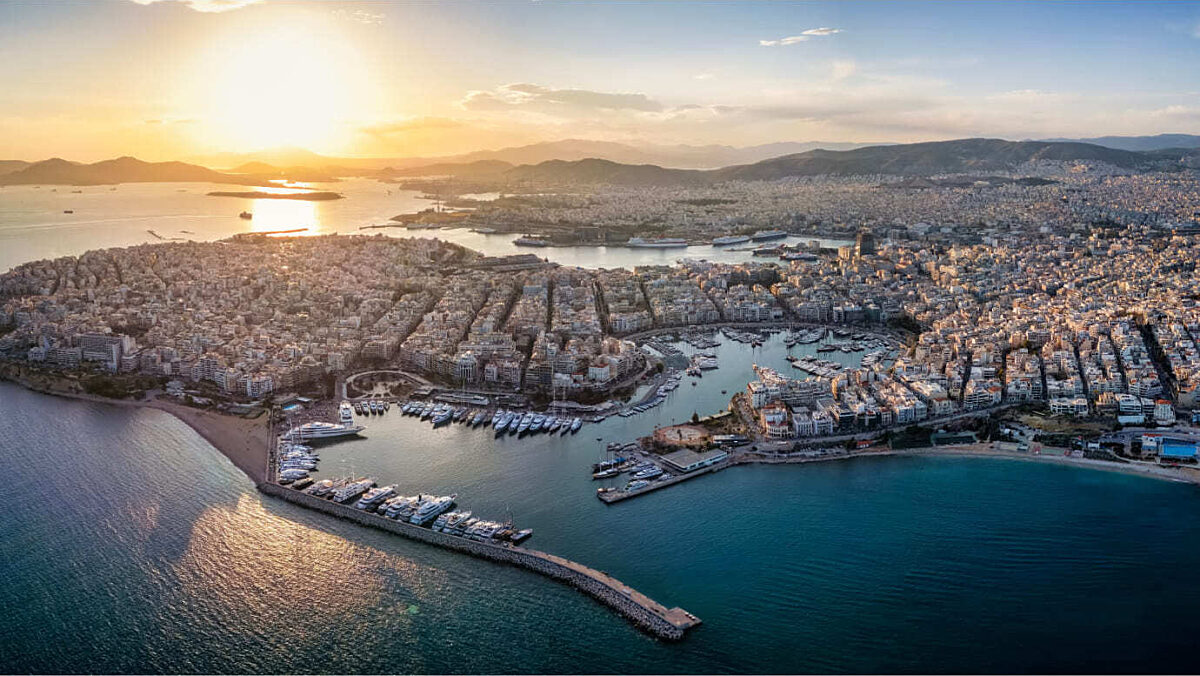
In real estate investment strategies for Greece’s Golden Visa, the key factor is not merely the minimum investment threshold, but the underlying economic fundamentals behind the asset. Within the greater Athens area, Piraeus Port stands out as one of the most significant growth drivers.
Far from being just the largest seaport in Greece, Piraeus has evolved into one of the most important logistics hubs in Europe and the Mediterranean.
Piraeus in numbers: Scale and position in Europe
Over the past decade, Piraeus has undergone a remarkable transformation, particularly following extensive restructuring and modernization.
Key highlights include:
- Ranked among the top 5 largest container ports in Europe
- Container throughput reaching approximately 5–5.5 million TEU annually in recent years
- The number one container port in the Mediterranean
- Handling over 20 million passengers per year (including ferries and cruise ships), placing it among the largest passenger ports globally
- Contributing billions of euros directly and indirectly to Greece’s GDP
In the container segment alone, throughput stood at just 0.8 million TEU before 2010. Following major infrastructure upgrades and investment, this figure has increased multiple times, positioning Piraeus as a critical node in the Asia–Europe supply chain.
Strategic role in global trade
Piraeus’ geographic location is its key competitive advantage:
- Positioned at the crossroads of Europe – Asia – North Africa
- Shorter shipping time from the Suez Canal compared to many Northern European ports
- Direct connections to rail and highway networks դեպի Central and Eastern Europe
These advantages make Piraeus the “first entry point” for many cargo routes from Asia into the EU market.
Beyond being a transshipment hub, the port also drives the development of:
- Warehousing and logistics
- Supporting industries
- Financial and commercial services
- International maritime transport companies
This multi-layered economic ecosystem forms a solid real economic foundation for the local real estate market.
Impact on Piraeus real estate
When a port reaches a scale of over 5 million TEU annually and serves more than 20 million passengers per year, its impact on housing demand becomes inevitable.
Rising long-term housing demand
Thousands of professionals working in logistics, engineering, management, transportation, and related services are based in the Piraeus area. This creates:
- Stable long-term rental demand
- Higher occupancy rates compared to areas purely dependent on tourism
Urbanization and regeneration
The Greek government and local authorities have been actively investing in:
- Expansion of the Athens–Piraeus metro line
- Redevelopment of coastal areas
- Upgrading marinas and commercial infrastructure
Urban regeneration projects are gradually transforming Piraeus from a traditional industrial zone into a new residential and commercial hub.
Strong price upside potential
Compared to central Athens, property prices in Piraeus remain more competitive, while directly benefiting from:
- Growth in logistics
- Increasing international passenger traffic
- Ongoing infrastructure investment
This makes Piraeus particularly attractive for Golden Visa investors seeking to balance residency objectives with asset performance.
Greece Golden Visa and investment strategy in Piraeus
The Greece Golden Visa is not merely a residency-by-real-estate-investment program. For strategic investors, it represents a broader asset allocation decision in a context where Europe is increasingly tightening investment migration schemes. Therefore, the key factor is not just “eligibility,” but the quality and structure of the underlying asset.
In this context, Piraeus emerges as a system-driven opportunity, rather than a short-term play.
Investing based on cash flow, not just capital appreciation
One of the common risks of Golden Visa investments in tourism-driven cities is their heavy dependence on seasonality. Rental income can fluctuate significantly depending on tourism cycles, short-term rental regulations, and local policies.
In contrast, Piraeus is driven by:
- Large-scale logistics operations (over 5 million TEU annually)
- Passenger traffic exceeding 20 million per year
- A strong ecosystem of shipping, warehousing, and maritime service companies
This creates structural, long-term rental demand from workers, engineers, supply chain managers, and international businesses. As a result, assets in Piraeus can generate more stable cash flow compared to areas reliant on short-term tourism.
Leveraging the infrastructure cycle
The development history of major port cities shows a clear pattern: once logistics infrastructure reaches regional scale, urban regeneration follows.
In Piraeus, key factors are already in place:
- Expansion of metro lines connecting directly to Athens
- Redevelopment of coastal areas and marinas
- Increased commercial and service-sector investment
- Conversion of former industrial zones into residential areas
In this context, an effective investment strategy is not about immediate returns, but about entering early in the urban transformation cycle. When infrastructure is established but prices have not fully reflected potential, mid- to long-term appreciation becomes more compelling.
Diversifying risk in a European portfolio
For international investors, the Golden Visa is often part of a broader cross-border diversification strategy. Piraeus offers advantages across three layers:
- Infrastructure layer: A strategic EU seaport
- Real economy layer: Logistics, trade, and maritime transport
- Urban layer: Expansion of the Athens metropolitan area
This intersection reduces reliance on any single growth driver. Even during economic fluctuations, maritime trade and supply chains remain essential.
Balancing residency goals and financial performance
The Greece Golden Visa allows investors to maintain residency with flexible physical presence requirements. However, focusing solely on legal eligibility while ignoring asset performance may lead to missed optimization opportunities.
Piraeus enables a balanced approach:
- Residency rights for the entire family
- Strong long-term rental potential
- Capital appreciation linked to infrastructure cycles
- Better liquidity compared to more remote areas
As some parts of Athens have already seen significant price growth post-pandemic, identifying markets with remaining upside potential becomes increasingly important. Piraeus is still in a transformation phase, rather than at its peak.
Long-term perspective: From port to economic hub
Looking ahead over the next 5–10 years, Piraeus is not merely a supporting area for Athens, it is positioning itself as an independent coastal economic hub with diverse functions:
- Container port
- International cruise port
- Maritime transport center
- Regenerated residential districts
Within a Golden Visa strategy, investing here means owning assets located along a key European trade corridor, a fundamentally driven advantage rather than a short-term cycle.
Conclusion: Investing along global trade flows
Piraeus Port is more than just a maritime symbol of Greece. With:
- Over 5 million TEU annually
- More than 20 million passengers per year
- A leading position in the Mediterranean
- An expanding logistics ecosystem
the area represents an investment model tied to global trade flows, rather than purely tourism cycles.
Within a Golden Visa strategy, selecting assets in a strategically positioned infrastructure hub like Piraeus offers a dual advantage:
✔ European residency rights
✔ Assets backed by real economic growth
From a long-term perspective, Piraeus is not just a port, it is an emerging economic center reshaping the southern axis of Athens.