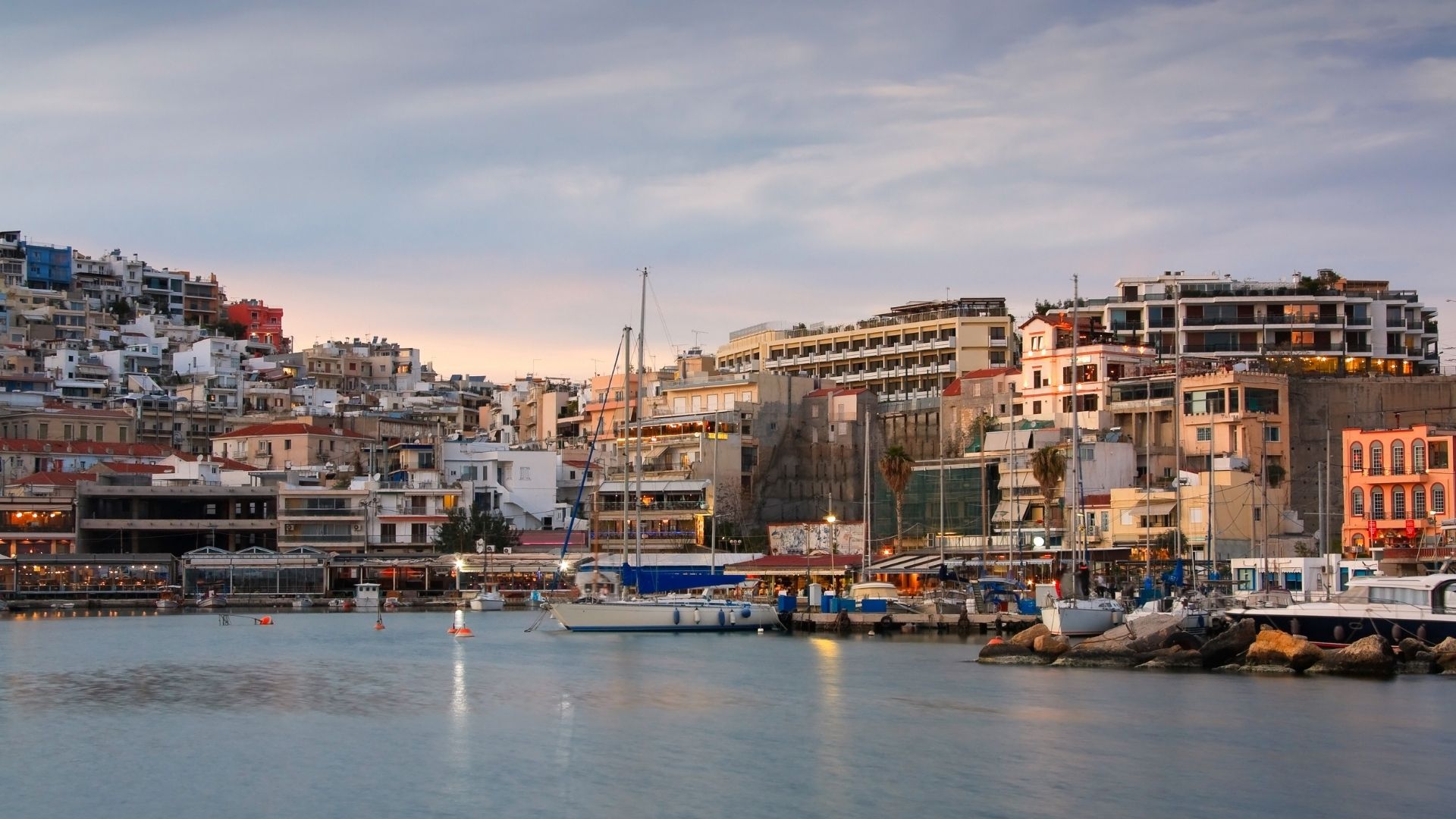
The year 2025 marks a significant transformation for Piraeus, Greece’s largest port city, as it rises to become the country’s second-largest destination for international investment, just after Athens.
No longer merely a maritime transport hub, Piraeus is redefining its role within the national economy, transitioning from a traditional port into a multi-sector center for business, logistics, and investment.
Recent economic indicators suggest that this shift is not cyclical, but rather reflects a deeper, structural growth trend.
A surge in business activity
One of the clearest signals of Piraeus’ growing investment appeal is the sharp increase in business activity.
According to the Piraeus Chamber of Commerce and Industry:
- 1,840 new businesses were established in 2025
- 487 businesses ceased operations
A ratio of nearly 4 new businesses for every closure is a strong indicator of a rapidly expanding business environment and increasing attractiveness to both domestic and international investors.
Currently, the Chamber records approximately 19,300 member businesses, with expectations to surpass 20,000 in the near future. This further strengthens Piraeus’ position as Greece’s second-largest business hub, complementing Athens within the national economic structure.
Importantly, business growth is no longer limited to traditional shipping sectors, but is expanding into:
- Logistics and supply chain
- Trade-related financial services
- Real estate and construction
- International business support services
This reflects a rapidly diversifying and maturing economic ecosystem.
Real estate market: Reflection of international capital flows
The growth of Piraeus’ real estate market provides a clear signal of incoming investment capital.
From Q3 2023 to Q3 2024:
- Property prices increased by approximately 27.8%, from ~€2,000/m² to €2,556/m²
Looking at the longer term:
- Property prices have risen by around 84% since 2019
This represents strong growth, especially in the context of a broader European real estate market that has been undergoing adjustments.
Key drivers behind this growth include:
- International capital inflows via the Golden Visa program
- Housing demand from the logistics and maritime workforce
- Expansion of infrastructure surrounding the port
- A shift away from central Athens in search of more competitive pricing
Notably, Piraeus is currently at a stage similar to where Athens was a few years ago: relatively competitive pricing combined with high growth momentum, offering attractive upside potential for long-term investors.
Port of Piraeus: Strategic infrastructure underpinning growth
At the core of this transformation lies the Port of Piraeus, a strategic infrastructure asset not only for Greece but for Europe as a whole.
Today, the port:
- Is the largest in Greece and among the top three in Europe
- Ranks among the largest container ports in Europe
- Serves as a key transshipment hub in the Asia–Europe supply chain
Following large-scale investments from COSCO Shipping, the port has undergone significant modernization, improving both container handling capacity and operational efficiency.
In terms of economic impact:
- The port generates approximately €1.4 billion in economic value annually
- Contributes around 1% to Greece’s GDP
More importantly, Piraeus’ geographic position enables it to act as a “southern gateway” to Europe, directly connecting trade routes from Asia—particularly China—into EU markets.
As global supply chains continue to restructure, strategically located ports like Piraeus are becoming increasingly valuable infrastructure assets.
Piraeus in the context of global capital flows
The rise of Piraeus is not occurring in isolation, it is part of a broader trend of increasing investment flows into Greece.
- In 2024, Greece attracted approximately €7.6 billion in FDI, the second-highest level in 15 years
- In the first half of 2025, FDI reached around €3.1 billion
These capital flows are primarily concentrated in two key hubs:
- Athens, the financial and administrative center
- Piraeus, the logistics and trade hub
This distribution reflects a clear economic structure: Athens and Piraeus are evolving into a dual-engine growth model, similar to patterns seen in many developed economies, where the capital city and port city jointly drive national growth.
Conclusion: From port city to multi-sector investment hub
What is happening in Piraeus is not just short-term growth, but a long-term economic repositioning.
From a traditional port city, Piraeus is transforming into:
- A regional logistics hub
- A fast-growing real estate market
- A magnet for businesses and international capital
As investors increasingly seek markets that combine growth, infrastructure, and development potential, Piraeus is emerging as a compelling opportunity in Europe.
In the long term, with its strategic role as a trade gateway and the continued expansion of its economic ecosystem, Piraeus has the potential to become one of the most important maritime and investment hubs in the Mediterranean.