In long-term investing, one principle rarely changes: Strategic infrastructure determines the quality of an economy’s growth.
Economies driven by credit cycles, short-term consumption, or asset speculation tend to be more volatile. In contrast, countries that possess infrastructure generating **real cash flow, especially flow tied to global trade, **typically demonstrate greater stability and resilience during periods of uncertainty.
Panama is a clear example of a growth model built on strategic infrastructure.
The Panama canal: A structural revenue engine
The Panama Canal is not merely a geopolitical symbol, it is a core economic asset that generates stable and structural foreign currency income for the country.
According to the Panama Canal Authority (ACP), revenue in fiscal year 2025 increased by 14.4%, reaching over USD 5.7 billion. This reflects both resilience and expansion, despite ongoing volatility in global trade.
Today, the canal handles approximately 6% of global maritime trade, connecting:
- 180 shipping routes
- 1,920 ports
- 170 countries
Its largest users include the United States, China, and Japan, three of the world’s leading trading economies.
This revenue growth is not a short-term phenomenon. Since 2016, when the third set of locks for Neopanamax vessels became operational, allowing ships with more than triple the capacity of traditional vessels, the canal’s throughput and efficiency have fundamentally transformed.
This represents a structural upgrade, not a temporary adjustment.
USD 8.5 billion in new investment: A signal of long-term vision
Even more notable is Panama’s forward-looking strategy.
The ACP is currently implementing four major projects with a total investment of USD 8.5 billion, including:
- A USD 1.5 billion reservoir to ensure sustainable water supply
- A strategic gas pipeline corridor
- Two new ports at both ends of the canal
- A logistics corridor connecting regional transport networks
These projects aim to increase revenue by 20–25% in the coming years.
This is not merely capacity expansion, it represents a strategic shift positioning Panama from a transit route into an integrated logistics, energy, and trade hub.
When a country consistently reinvests in strategic assets that generate national cash flow, it typically reflects a strong foundation for long-term growth.
Growth driven by an irreplaceable location
Panama is not an economy driven by a large population or domestic consumption.
Its growth is anchored in a geographic position that is fundamentally irreplaceable in global trade.
As global supply chains are being restructured, transport time and logistics costs are becoming critical competitive factors. The Panama Canal significantly shortens transit time between the Atlantic and Pacific Oceans, creating direct advantages for global shipping, energy, and trade corporations.
As global trade continues to expand, Panama’s role is unlikely to be replaced by alternative routes in the medium term.
This is the foundation that ensures the country’s stable foreign currency inflows.
From infrastructure economy to investment environment
An economy supported by stable foreign currency income, managed by a professional operating authority, and backed by long-term reinvestment strategy typically offers a less volatile investment environment compared to markets dependent on financial cycles.
Panama is further strengthened by several key supporting factors:
- Use of the US dollar as its functional currency
- A well-developed international banking system
- A legal framework familiar to global investors
- Its role as a regional financial and trade hub
It is no coincidence that in recent years, Panama has seen a steady increase in international investors establishing assets and residency in the country.
Panama is not chosen because of “trend.”
Panama is chosen because of structure.
Approaching Panama from a strategic perspective
At Casa Seguro Capital, we approach Panama not as a standalone market, but as a component within a global asset allocation strategy.
Our investment approach is built on a core principle: Assets must be anchored in the real operating economy.
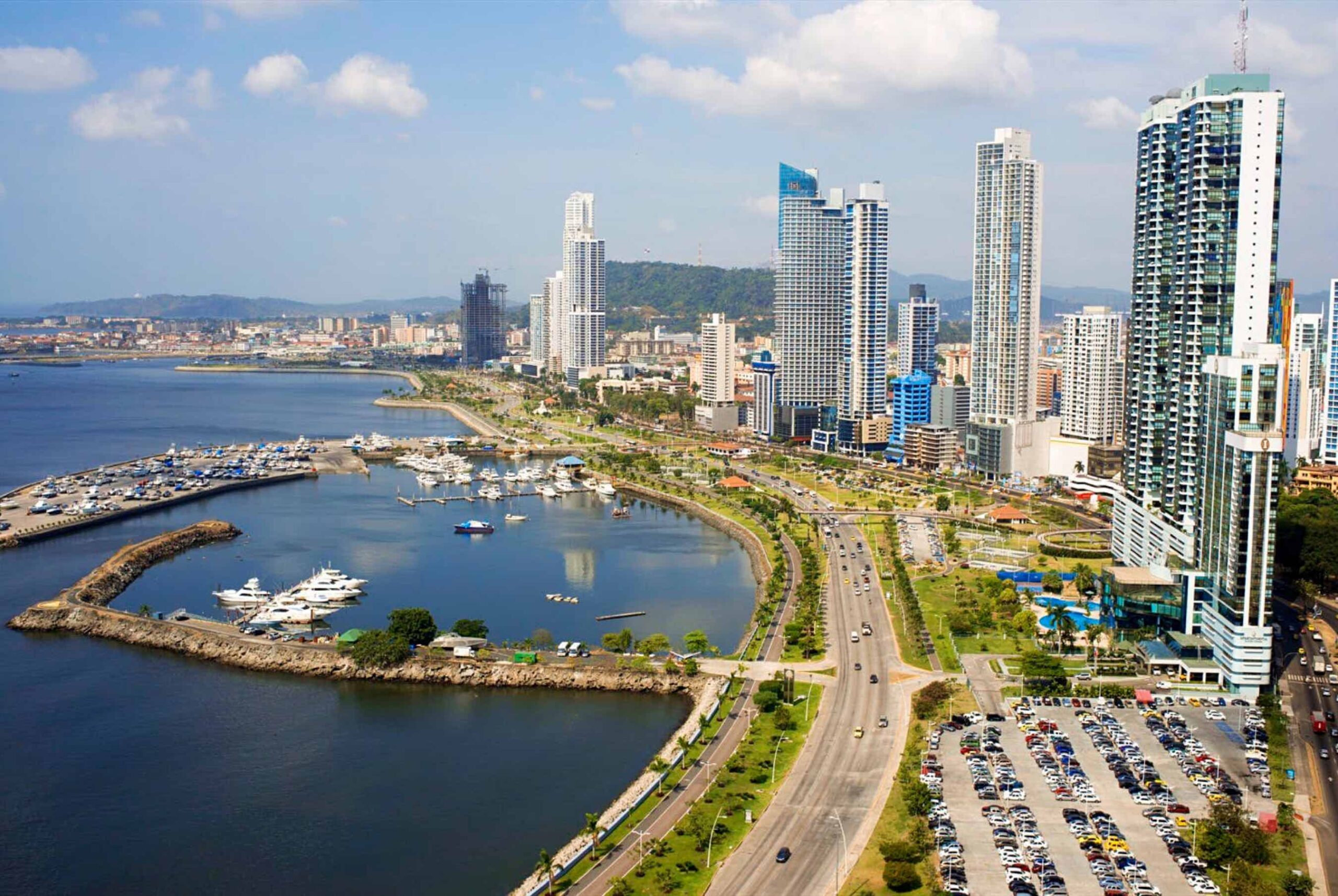
This means focusing on real estate projects located in areas that directly benefit from the growth of logistics, trade, and financial activity, particularly in Panama City and key economic zones connected to the canal ecosystem.
Beyond the asset itself, investors may also establish permanent residency in Panama under current regulations, adding an additional layer of legal flexibility to their personal and family structures.
The differentiation lies not in simply “buying property for residency,” but in integrating assets, legal positioning, and long-term strategy into a unified structure.
Panama in a global asset allocation framework
In an increasingly volatile global environment, international investors are prioritizing:
- Countries with infrastructure that generates real cash flow
- Stable currency systems
- Irreplaceable roles in global trade
- Transparent legal frameworks
- The ability to establish long-term presence
Panama embodies all of these factors simultaneously.
When global infrastructure drives sustainable economic growth, assets tied to that foundation often become a core component of long-term portfolio strategies.
Panama is not a short-term opportunity.
It is a strategic building block within a global asset portfolio.